

I believe a leaf of grass is no less than the journey-work of the stars
Dreaming about Artemis II

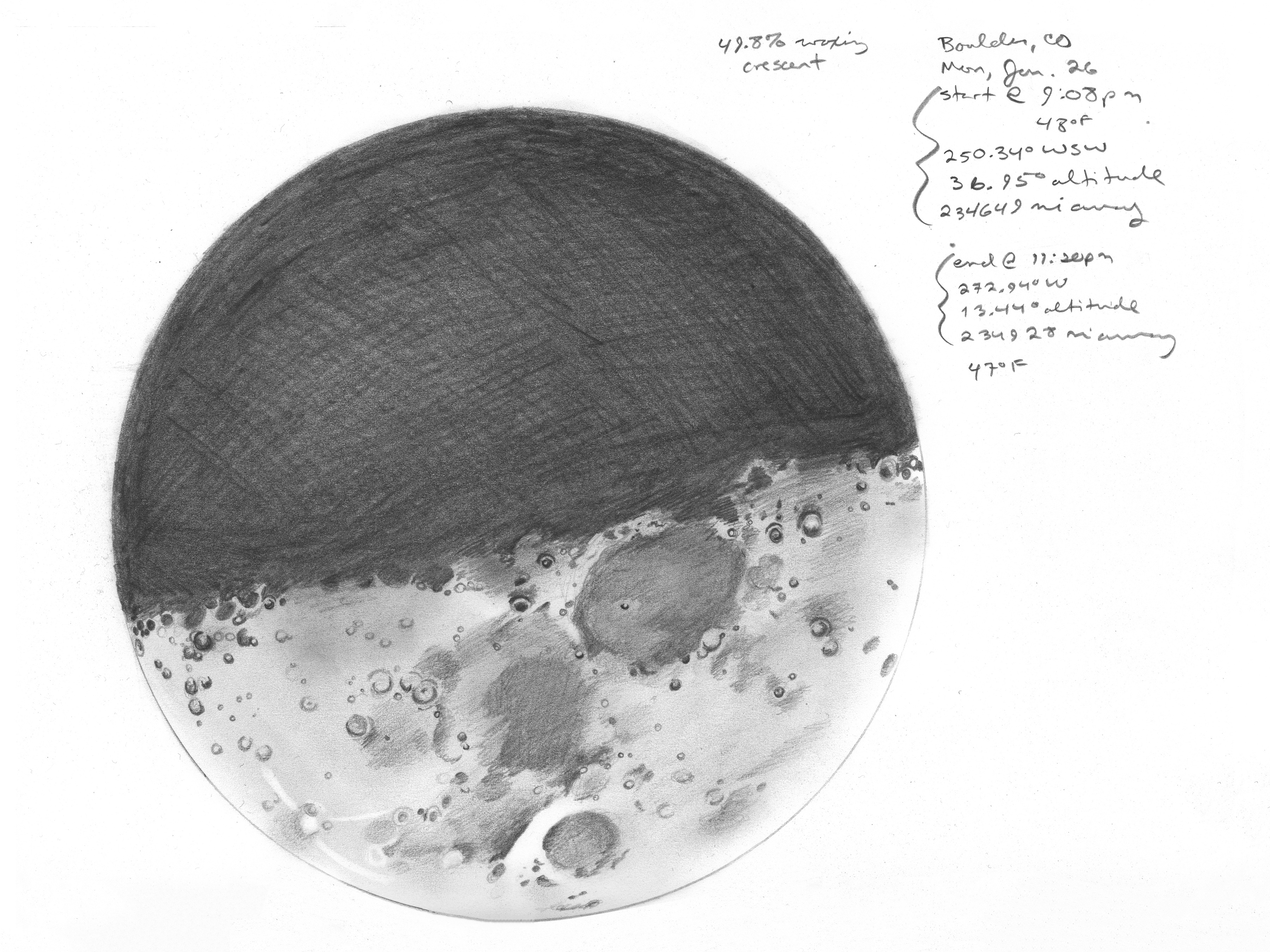
“I believe a leaf of grass is no less than the journey-work of the stars” — Walt Whitman, “Song of Myself (1892 version)”
Astronomy was my gateway drug to falling wildly in love with science. From time to time, I regret that I became an artist instead of an astronomer. Maybe it’s never too late to change your course through life, your identity, your ambitions… but I haven’t. One reason I wish I could live forever is to follow every path that one life is too short to take. I want to know what’s out there, in the final frontier.
The most wonderful part of being an artist is that I can use all of my untaken life paths, all of my unfulfilled yearnings, and create something beautiful out of them. My love of astronomy inspired two major artworks. I’ve written about both, and as I dream about what it must have been like for the Artemis II astronauts circling the moon, I’m also remembering how much joy I felt in making those pieces.
For one, I drew the moon every night for six months. The drawing at the top of this essay is a favorite. Last summer, I wrote about that experience for Drawing Never Dies:

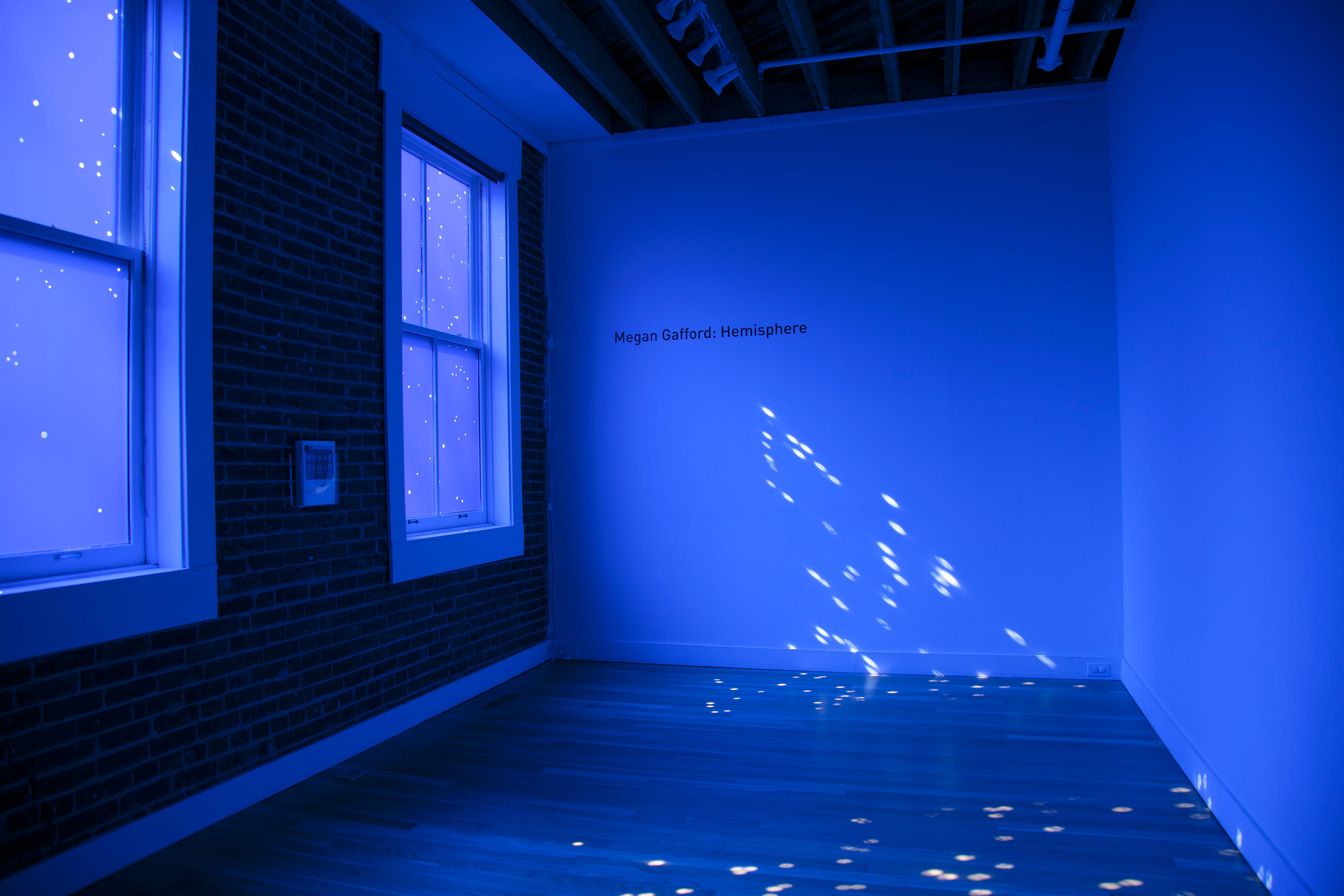
For the other, I fitted star maps into the windows of the Boulder Museum of Contemporary Art that glowed like stained glass. Pinholes in the maps represented the stars, through which the sun projected constellations onto the walls and floors. As the sun travelled from east to west, and clouds floated by, the lights stretched and flickered. Sometimes, the star maps acted like pinhole cameras by projecting images of trees and passersby inside the museum. It was a cosmic cinema:
Both of these artworks taught me something I could not have predicted before I made them. In “Learning How To See The Moon” I explain what I discovered from my nightly drawings in depth. When I installed my star-map installation, I was uncertain about what optical effects would appear once I filtered all the sunlight through the blue panels, so that the result filled me with wonder as if I had no hand in its creation.
I feel so much relief that the Artemis II astronauts made it home safely, for their sake, but also for the sake of exploration. If they hadn’t, then I suspect future manned missions to the moon and beyond would become far less likely. And if I can’t travel the stars myself, then I need to live vicariously through the astronauts who get to make the journey.
If, like me, you wish there were even more images from Artemis II, then I hope my drawings and timelapse video help you scratch that itch.
I can relate to wanting to live forever to follow all the possible paths, and art being an avenue that allows for exploring a variety of them while living a finite existence.
Thank you 🥹 and what an incredible childhood experience to cherish. I wish the NASA live feeds were more engaging for kids! They could do such a better job of spreading that joy and wonder.