

On Truth and Beauty
My latest in Quillette.

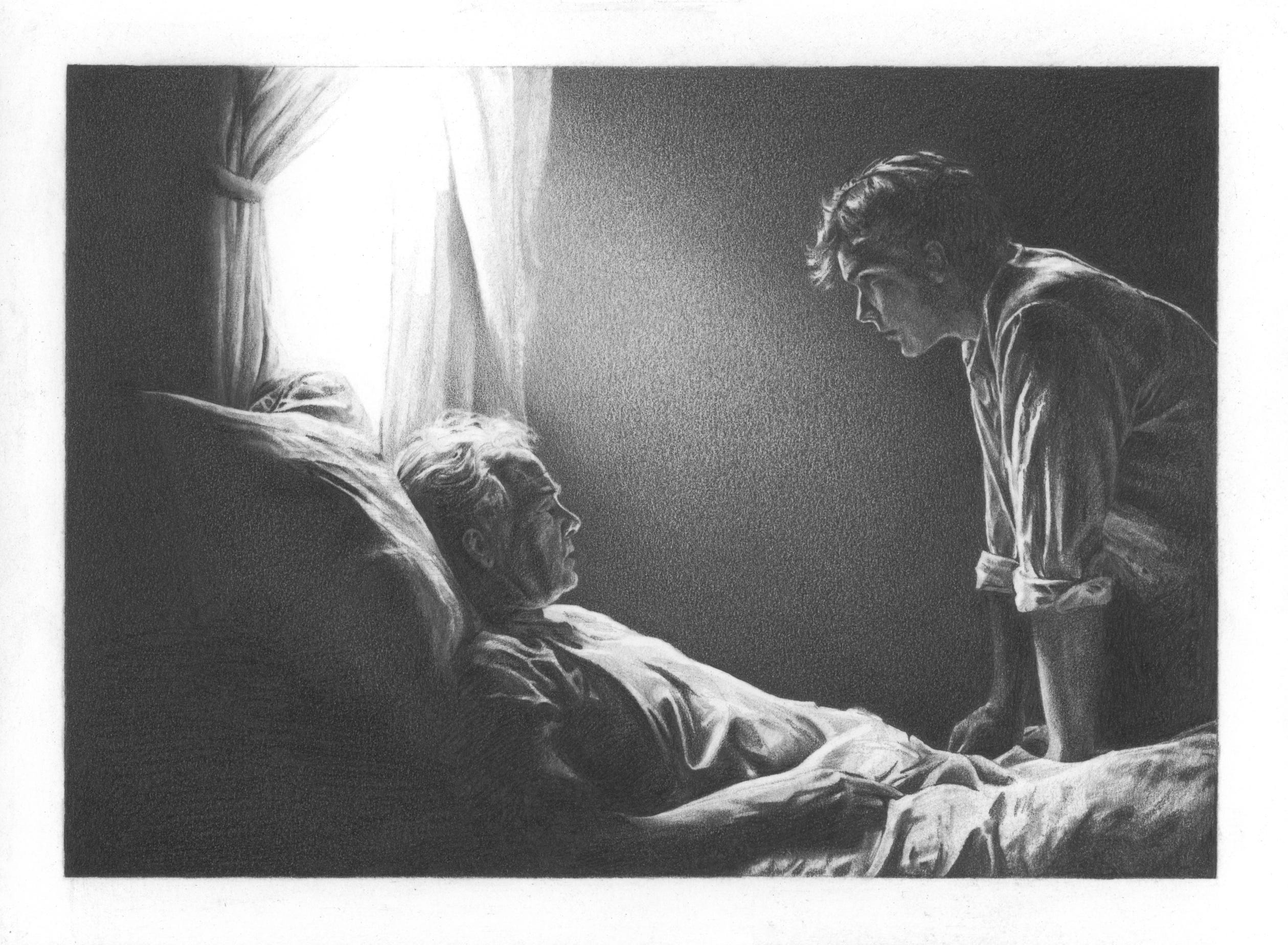
This drawing, which I made for my latest piece in Quillette, depicts the final scene in John Steinbeck’s East of Eden. I use the novel as an example of how “Beautiful art can guide us through places where scientific truth can’t help us.” Curious how? Read on:

In it, I defend biologist Jerry Coyne against allegations of anti-art bigotry. He claimed that art is not about truth. And he’s right! Art is about beauty.
John McWhorter was one of the people who bristled at Coyne’s claim. I’m a fan of McWhorter’s work, so I particularly wanted to convince him that art is actually about beauty. And I’m proud to report that he read the piece and told me that my argument won him over.
If you’re skeptical, then I hope I convince you, too. Please read it!
Coyne was so delighted that an artist agreed with him that he wrote a response to my piece on his blog Why Evolution is True, where he makes a similar point about the painter Francisco Goya that I discussed in The Metropolitan Review for “The Power of Art in the AI Age”. Here’s the relevant passage, in which I compare Goya to Marcel Duchamp — I’m quoting at length because this excerpt pairs well with the Quillette piece:
About a century ago, Marcel Duchamp became the father of contemporary art by sidelining beauty in favor of what he called “a reaction of visual indifference with at the same time a total absence of good or bad taste . . . in fact a complete anesthesia.” That was how he selected a manufactured urinal to display as an art piece titled Fountain. The art world eventually embraced Duchamp’s “ready-mades,” the ordinary objects he declared to be art, as the logical conclusion of devaluing traditional art skills to chase novelty.
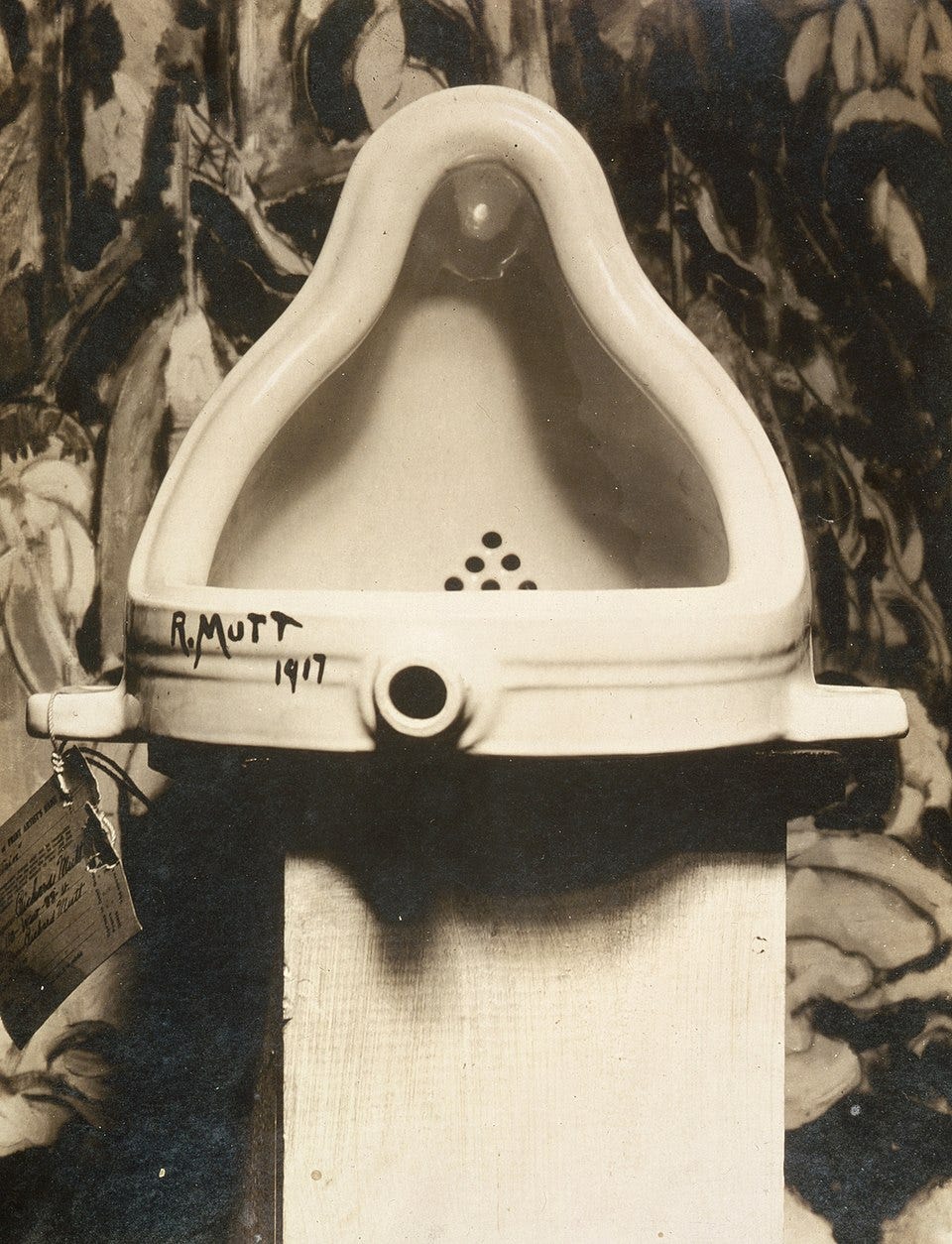
Duchamp’s influence has diluted over time, but until recently, beauty was also an art-world taboo, and its unfashionable stench lingers. Art critic Dave Hickey tried to reconcile artists with beauty in the early 1990s by insisting that beauty would be the next major issue in the art world. This did not come to pass, but still emboldened future critics to soften their hearts.
Hickey inspired art critic Arthur Danto to think it was “time to have another look at beauty.” Danto admitted in the introduction to his 2003 book The Abuse of Beauty that he initially “felt somewhat sheepish about writing on beauty,” which “had almost entirely disappeared from artistic reality in the twentieth century, as if attractiveness was somehow a stigma, with its crass commercial implications.” For Danto, it took one of the most brazen terrorist attacks in history to make him realize that beauty matters, even though he was a philosopher of aesthetics:
The spontaneous appearance of those moving improvised shrines everywhere in New York after the terrorist attack of September 11th, 2001, was evidence for me that the need for beauty in the extreme moments of life is deeply ingrained in the human framework. In any case I came to the view that in writing about beauty as a philosopher, I was addressing the deepest kind of issue there is . . . . But beauty is the only one of the aesthetic qualities that is also a value, like truth and goodness. It is not simply among the values we live by, but one of the values that defines what a fully human life means.
Many contemporary artists are still embarrassed to unequivocally say that beauty is central to art. Such a statement, if not properly hedged, would be perceived as unsophisticated — even though it is true. This is not to say that artists should dismiss edge cases, but that edge cases should not overwhelm the central purpose.
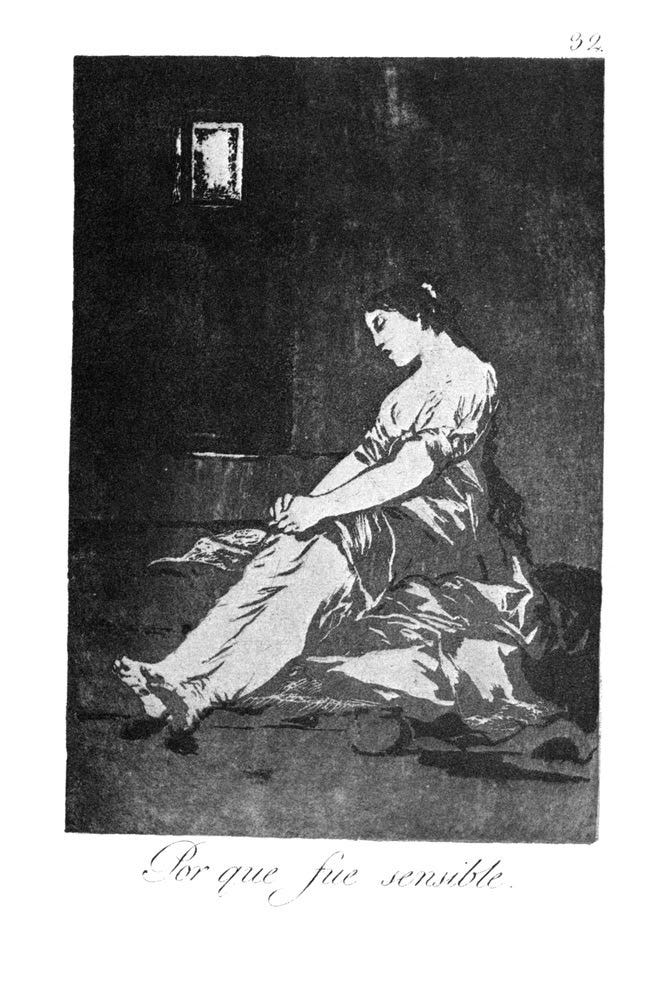
Consider, for example, how the Spanish Romantic painter Francisco Goya depicted the grotesque. Goya said that his Los Caprichos (The Caprices), a series of aquatint and etching prints, is about “the innumerable foibles and follies to be found in any civilized society, and from the common prejudices and deceitful practices which custom, ignorance, or self-interest have made usual.” Or, as art critic Robert Hughes put it, Goya made “eloquent and morally urgent art out of human disaster”:
Perhaps nowhere in his graphic work is there a deeper expression of pathos and fellow feeling for the condemned than in Capricho 32, Por que fue sensible (‘Because she was impressionable’). It is a portrait of a woman who was condemned to die for conspiring with her younger lover to kill her older husband . . . .
A beautiful woman sits in jail, surrounded by darkness of such intensity that it seems almost to be gnawing at her, eroding her fragile form. Her body, hands resting on her knees, forms a right triangle, the kind of absolutely stable and elementary composition Goya favored in his graphic work. Her head is bowed, and her expression is of silent, inward distress . . . . High up in the cell door is a rectangular spy hole, through which she can be observed. A crack of light beneath the ill-fitted door only reinforces the sense of carceral gloom . . . . It is entirely painterly, rendered only in brushstrokes. It is a tour de force of the aquatint medium, and its softness, its almost liquid delicacy, only serves to emphasize the terrible inequality that is its subject: the iron machinery of punishment poised to crush una mujer sensible into the grave.
In Los Caprichos, Goya paints misery beautifully. But elsewhere, such as in his painting of Saturn Devouring His Son, he creates an ugly scene of a hideous monster gnawing on a bloody and rigid human corpse. This comes from Goya’s Black Paintings, the murals he painted in his home later in life when he was consumed by misanthropy and feared going insane.
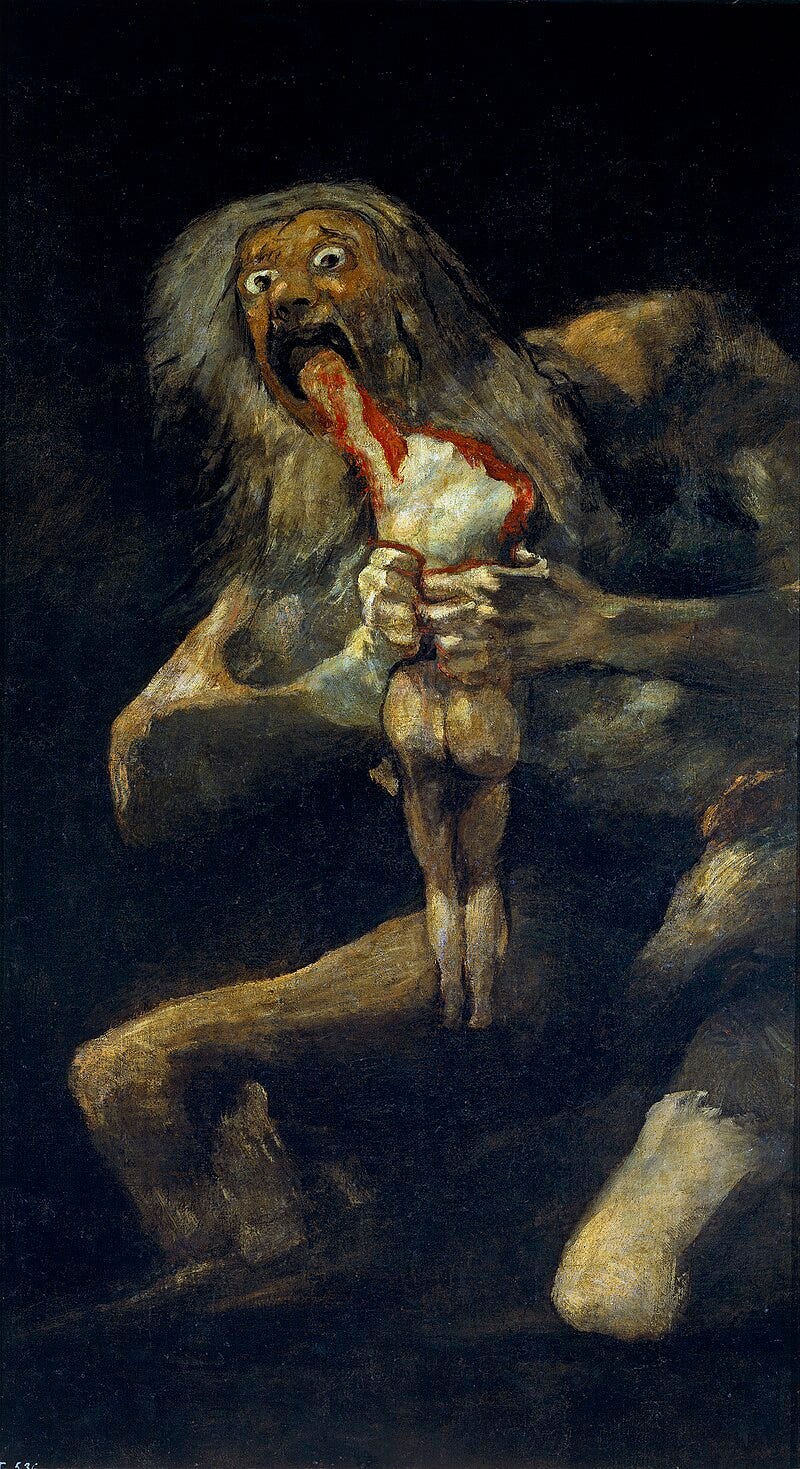
Though Goya had once made lovely pictures about sin and punishment, here he refused to beautify the brutality of the mythological Titan cannibalizing his son. That does not mean his Black Paintings cease to be art. They demonstrate the value of beauty by denying us its pleasures, showing us the tragedy of losing it.
Goya was never indifferent to beauty even when he would not create it. This is qualitatively different from Duchamp, who forthrightly described his own work as “anti-art” — and the art world should have taken him at his word.
You can read the rest of that piece here:
