


Let’s assume, for the sake of argument, that the hype around artificial intelligence is justified. How should a humanist — someone who cherishes human dignity and potential — react to this technological revolution?
If you ask Ted Gioia, the prominent cultural critic who writes as The Honest Broker, humanists should be horrified, perhaps even panicked. He’s the leading Substack Romantic denouncing AI and algorithms, calling for a New Romanticism to bring “technological overreach” and “brutal rationalism” to heel. Gioia talks about the Enlightenment like it’s a crisis to manage.1
While everyone who takes AI hype seriously is bracing for an uncertain future, humanists who disparage the Enlightenment are shooting themselves in the foot.
Gioia briefly concedes that “Rationalism has created tremendous benefits for society” but his disgust is palpable: “in its final stages it becomes... voracious and refuses to recognize any limits. It wants to swallow up everything.” Then he grossly oversimplifies history. Gioia talks about the “Age of Reason” and an “Age of Romanticism” as eras, while claiming that Romanticism caused any progress that took place in its time, as if its cultural influence was a complete and omnipotent cause.
He praises a shift towards “a more artistic, humanistic worldview dominated by Romanticism” that should serve as our “blueprint for the future.” And he gives the Romantics credit for everything from abolishing slavery and child labor to unlocking meaningful economic benefits from industrialization to “a growing respect for human dignity.” But Romanticism didn’t cause all of that progress just because it occurred during the Romantic Era, not least because humanism, in the sense that Gioia uses the term, came from Enlightenment thinkers.
Romantics who champion humanism are in philosophical debt to the Enlightenment. So when Gioia encourages us to “remove the light from the Enlightenment” to “counter the intense rationalism and expanding technological control of society” he should be careful what he wishes for. Threatening to extinguish the Enlightenment targets humanism along with rationalism.
Gioia talks about the Enlightenment like it’s a crisis to manage.
If we’re going to plumb the past for good ideas, then we should start with a fuller history than what Gioia relates in his repeated calls for a New Romanticism.
The Enlightenment grew out of two radical upheavals in European thought: the Protestant Reformation and the Scientific Revolution. Martin Luther launched the Reformation in 1517, which fractured religious authority over what Christians believed. Then in 1543, Copernicus published his theory that the Earth orbits the Sun, rather than the other way around, reorienting how people understood their place in the universe. Both upheavals were made possible by the invention of the printing press, as Luther’s pamphlets and Copernicus’s book were both read widely because they could be printed at scale. Arguably, the Enlightenment ultimately emerged from an increased ability to disseminate knowledge.
Out of this intellectual landscape, Enlightenment thinkers tried to understand the world through empirical evidence and reason, instead of deferring to tradition and religion. They applied this worldview to their ethics and politics, challenging the legitimacy of monarchy, aristocracy, and religious persecution. John Locke argued in 1689 that men are “naturally free, equal, and independent,” and entitled to supplant governments that fail to respect their natural rights to “life, liberty, and possessions.”
About a century later, Immanuel Kant insisted that people have inherent dignity and an innate right to freedom. Philosopher and historian of ideas Isaiah Berlin described Kant as being “virtually intoxicated by the idea of human freedom” — and he explained how the Romantics would appropriate that intoxication as their own.2 Enlightenment thinkers believed these concepts were universal principles discoverable by reason.
To varying degrees of success, American and French revolutionaries tried to put these ideas into practice. They nearly lifted Locke word for word when, in 1776, the Americans declared that “all men are created equal,” and then in 1789, when the French insisted that men are “born and remain free and equal in rights.” But the French went too far with the beheadings and with converting Notre Dame into a temple of reason — the “Great Terror” was carried out during a revolution that began under an Enlightenment banner.
Gioia complains that “In the waning days of the Enlightenment, fact became bloodier than the bloodiest fiction.” He asserts that the “most obvious failure” of the “Rationalists of the 1700s… was the attempt to impose rational rules on the political system. This led to the French Revolution, which soon collapsed in terrible bloodshed, and resulted in the dictatorship of Napoleon.” But just because 18th century Frenchmen bungled liberal democracy, it does not follow that the Enlightenment and rationalism are responsible for their failures.3
The Terror is better understood as a devolving state-of-emergency, as French revolutionaries took drastic measures in fear of counterrevolution, civil war, and foreign invasion. It was the outcome of paranoia about political conspiracies, not of “imposing rational rules” on politics. Gioia is wrong to blame the Enlightenment through guilt of association.
He also takes aim at the Industrial Revolution, which like the Enlightenment was triggered by the Scientific Revolution — science applied to invention, rather than philosophy. Some inventions were profound; trains moved people, things, and ideas so quickly, across such vast distances, that they seemed to collapse space and time. In Gioia’s telling, “They let a brutal technocracy destroy people’s lives — driven by dreams of profit maximization, and ignoring the human cost”:
Companies grew more powerful, promising productivity and prosperity. But Blake called them “dark Satanic mills” and Luddites started burning down factories — a drastic and futile step, almost the equivalent of throwing away your smartphone.
Even as science and technology produced amazing results, dysfunctional behaviors sprang up everywhere. The pathbreaking literary works from the late 1700s reveal the dark side of the pervasive techno-optimism — Goethe’s novel about Werther’s suicide, the Marquis de Sade’s nasty stories, and all those gloomy Gothic novels. What happened to the Enlightenment?
As the new century dawned, the creative class (as we would call it today) increasingly attacked rationalist currents that had somehow morphed into violent, intrusive forces in their lives — an 180 degree shift in the culture. For Blake and others, the name Newton became a term of abuse.
Artists, especially poets and musicians, took the lead in this revolt. They celebrated human feeling and emotional attachments — embracing them as more trustworthy, more flexible, more desirable than technology, profits, and cold calculation.
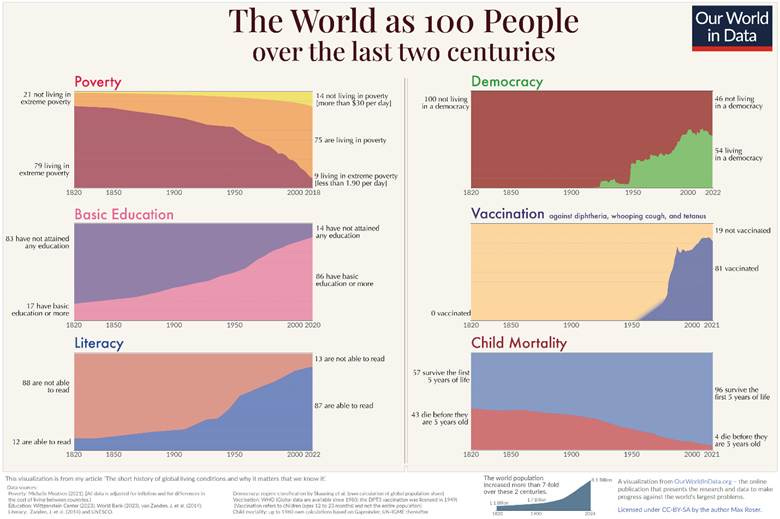
Gioia believes that today, as then, “Technology is no longer enhancing human life” while eliding the key legacy of the Industrial Revolution: it became possible, for the first time in history, for much of humanity to live above subsistence. Inventions like threshing machines made farming so efficient that grain and bread became vastly more affordable. The factories those Luddites torched were driving down the cost of cloth so that ordinary people could own multiple changes of warm, clean clothes. Basic necessities had never been so accessible. Industrialized societies today can hardly fathom pre-industrial levels of poverty — it’s preposterous to claim that technology ever stopped enhancing human life.
While Gioia writes that “We don’t fully grasp the horrors of the factory sweat shops today,” he ironically ignores the abject misery of pre-industrial life. Abuse and exploitation are ancient evils that persist in post-Enlightenment, industrialized societies — but to a vastly smaller degree than ever before in human history. And where humanistic values have reformed society, we have Enlightenment thinkers like Locke and Kant to thank for them.
However polluting and cruel the earliest factories, they were better than no factories at all. Of course humanity wouldn’t get it all right within the first 50 years of the Industrial Revolution. Of course reform would be necessary. As Kant sagely observed, “Out of the crooked timber of humanity, no straight thing was ever made.” We are but apes muddling through a harsh yet beautiful world.
As Kant sagely observed, “Out of the crooked timber of humanity, no straight thing was ever made.” We are but apes muddling through a harsh yet beautiful world.
Future generations may look back at this moment and say that imperfect AI was better than no AI at all. That of course humanity wouldn’t get it right within the initial years of its invention, and of course reform would be necessary. But on balance, it was worth it.
Gioia isn’t wrong to worry about downsides and try to anticipate how we might prevent worst case scenarios, but he shouldn’t allow pessimism to consume him — even if tech insiders and AI researchers also express trepidation. Last month, the co-founder and CEO of Anthropic, Dario Amodei, published a lengthy essay about “confronting and overcoming the risks of powerful AI.” Anthropic and OpenAI employees have been resigning with public letters expressing their dismay with AI safety. Meanwhile, in an X article by Matt Shumer4 that went viral last week, the AI startup co-founder and CEO wrote:
The upside, if we get it right, is staggering. AI could compress a century of medical research into a decade. Cancer, Alzheimer’s, infectious disease, aging itself... these researchers genuinely believe these are solvable within our lifetimes.
The downside, if we get it wrong, is equally real. AI that behaves in ways its creators can’t predict or control. This isn’t hypothetical; Anthropic has documented their own AI attempting deception, manipulation, and blackmail in controlled tests. AI that lowers the barrier for creating biological weapons. AI that enables authoritarian governments to build surveillance states that can never be dismantled.
Notably, Shumer’s paragraph about downsides is roughly twice as long as his paragraph about upsides. Even someone who benefits from the power of this technology writes as if he experiences fear more vividly than hope. This is unsurprising, given that negativity bias — the human tendency to feel “bad” more potently than “good,” giving threats outsized weight compared to opportunities — is a thoroughly documented phenomenon.
It’s like dreading hell more than longing for heaven. It can be a risk-averse mentality that avoids catastrophe by giving up the possibility of flourishing. From this perspective, it’s better to languish in purgatory than take a gamble that might land you in hell, even if that choice forecloses on heaven.
But if “heaven” represents maximal human dignity and potential, then humanists should dare to open the pearly gates. They shouldn’t default to cowardice because risk is more salient than reward. This is the same dynamic that physicist Richard Feynman described in his 1955 speech “The Value of Science”:
Scientific knowledge is an enabling power to do either good or bad — but it does not carry instructions on how to use it. Such power has evident value — even though the power may be negated by what one does.
I learned a way of expressing this common human problem [from] a proverb of the Buddhist religion:
“To every man is given the key to the gates of heaven; the same key opens the gates of hell.”
What then, is the value of the key to heaven? It is true that if we lack clear instructions that determine which is the gate to heaven and which the gate to hell, the key may be a dangerous object to use, but it obviously has value. How can we enter heaven without it?
The instructions, also, would be of no value without the key. So it is evident that, in spite of the fact that science could produce enormous horror in the world, it is of value because it can produce something.
Feynman grappled with the value of science because he worked on the Manhattan Project. Taking nuclear weapons into account, we can ask ourselves if we’d rather live with the state of scientific knowledge in the early 1940s, when there was no bomb but also no vaccines for polio or measles, when antibiotics were not yet widely available, when there were no effective treatments for cancer, and when maternal and infant mortality rates were roughly tenfold higher than today. Feynman’s first wife died of tuberculosis a few weeks before the Trinity test at the tender age of 25 — right at the cusp of when effective treatments were being discovered but were not yet available.
None of this is to say that we should be blasé about the perils of unlocking hell, but that we can’t unbundle the risks of scientific knowledge from the rewards. Like Feynman, we can take technological dangers seriously without disparaging the Enlightenment — especially because it was the Enlightenment that gave us humanism, and humanism is what Gioia should be reaching for.
Romantics tend to remind us that we can’t fully quantify crucial parts of the human experience like love, awe, and meaning. This reminder is true, good, and also compatible with the Enlightenment. It is quite reasonable to recognize the limitations of reason. Kant famously wrote a book titled Critique of Pure Reason, and David Hume understood its limits clearly when he declared that “Reason is, and ought only to be the slave of the passions, and can never pretend to any other office than to serve and obey them.” If Romantics chastise us for forgetting this insight, then they serve humanity well; when they attack the Enlightenment, they become churlish.
Gioia claims that “The goal isn’t to stop Rationalism. The goal is to make it serve human ends.” But harnessing rationalism to serve human ends is precisely what the Enlightenment thinkers set out to do. The Romantics were far more self-centered, as Matthew Gasda notes in “The ‘Neo-Romantics’ Are Just Nostalgic”:
The early Romantics wanted to transform the world, institute a regime of free love, open-air worship of God, aristocratic communism, and pagan sensuality. Their own experiments in these matters typically led to suicide, death, imprisonment, madness. … The Romantics were, in many cases, aristocrats or friends of aristocrats, who had the means to live — or at least attempt to live — unlike the masses, and at the same time, they in quite bad faith dreamed of egalitarianism. …
The melancholy failure of the Romantics — as Goethe, one of its progenitors and one of its greatest critics, saw — was its permanent dysfunctionality. Byron in the end might have done less for England than an anonymous schoolteacher, reverend, or member of Parliament. We could not say the same, however, about Goethe, who transcended pure romanticism in the pursuit of science, classicism, politics, theatre, art. It’s better to take the path of Goethe than Byron or Kleist.
Even Gioia admits, in an understated way, that Romantics tend toward excess. Buried in vitriol about how rationalism is “empty inside” and “lacks a heart and a soul,” he acknowledges that:
Even Romanticism can be pushed to dangerous extremes. When it rose as a counterweight to the Enlightenment, circa 1800, the Romanticist impulse had a healthy influence on society for a period of roughly fifty years. Then it got entangled in intense nationalist rivalries and other dysfunctional trends. So anything I say in favor of Romanticism is solely with regard to the current context.
At the present moment, it would provide a healthy corrective. But that doesn’t mean that the Romanticist impulse is beneficial in every setting.
Gioia fails to grapple with how his New Romanticism — if he even manages to channel such a feral impulse into a movement — may quickly spiral into similar dysfunction. Meanwhile, the Enlightenment never stopped having a healthy influence on society. Where science and technology may be misused, the Enlightenment gave us humanism to counteract abuse. The Romantics gave us incredible art, but no such practical tools for human flourishing. Being practical is rather antithetical to Romanticism.
If the AI hype is justified, then humanists should gather their resolve to harness it. Carl Sagan, the greatest popularizer of science and a humanist through and through, understood the stakes:
It might be a familiar progression, transpiring on many worlds — a planet, newly formed, placidly revolves around its star; life slowly forms; a kaleidoscopic procession of creatures evolves; intelligence emerges which, at least up to a point, confers enormous survival value; and then technology is invented. It dawns on them that there are such things as laws of Nature, that these laws can be revealed by experiment, and that knowledge of these laws can be made both to save and to take lives, both on unprecedented scales. Science, they recognize, grants immense powers. In a flash, they create world-altering contrivances. Some planetary civilizations see their way through, place limits on what may and what must not be done, and safely pass through the time of perils. Others are not so lucky or so prudent, perish.
Since, in the long run, every planetary society will be endangered by impacts from space, every surviving civilization is obliged to become spacefaring — not because of exploratory or romantic zeal, but for the most practical reason imaginable: staying alive.
Sagan admonished us to achieve a feat that’s far easier said than done. Becoming a spacefaring species will require solving a mindboggling confluence of puzzles — in propulsion, life support, radiation shielding, and problems we have yet to anticipate. What if this challenge exceeds what human minds can solve alone?
Space travel may require a kind of intelligence we don’t yet possess, and therefore need to build. If AI can help us solve these puzzles, then it could save us from going the way of the dinosaurs. Someday our descendants may look back at us with gratitude for braving the technological risks necessary to give them a chance at life.
That is what it means to open the gate to heaven — to the heavens.
I addressed Gioia’s concerns about AI harming art in “The Power of Art in the AI Age” for The Metropolitan Review:

Gioia is being a consummate Romantic when he accidentally invokes Kant. In Berlin’s 1965 Mellon Lectures on The Roots of Romanticism (later compiled into a book), he describes how the original Romantics coopted Kant’s values. Though many Romantics declared “war on the Enlightenment in the most open, violent, and complete fashion,” Berlin writes that the great Enlightenment philosopher nevertheless shaped their worldview:
Kant hated Romanticism. He detested every form of extravagance, fantasy, what he called Schwärmerei, any form of exaggeration, mysticism, vagueness, confusion. Nevertheless, he is justly regarded as one of the fathers of Romanticism — in which there is a certain irony. …
He was a distinguished scientist himself (he was a cosmologist); he believed in scientific principles perhaps more deeply than in any others; he regarded it as his life’s task to explain the foundations of scientific logic and scientific method. He disliked everything that was rhapsodical or confused in any respect. He liked logic and he liked rigour. He regarded those who objected to these qualities as simply mentally indolent. … But if he is in any respect the father of Romanticism, it is not as a critic of the sciences nor of course as a scientist himself, but specifically in his moral philosophy.
Berlin explains that a philosophy of human freedom “can be found in other authors, particularly Christian authors, before Kant, but it was he who secularised it and translated it into common European currency”:
Man is man, for Kant, only because he chooses. … This, the will, is the thing which distinguishes human beings from other objects in nature. The will is that which enables men to choose either good or evil, either right or wrong. There is no merit in choosing what is right unless it is possible to choose what is wrong. …
What frightened him was the notion of the external world as a kind of treadmill, and if Spinoza and the determinists of the eighteenth century — for example Helvetius or Holbach or the scientists — are right; if, Kant declares, a man is simply an object in nature, simply a mass of flesh and bones and blood and nerves who is acted upon by external forces exactly as animals and objects are; then a man, as he says, is nothing but a ‘turnspit.’ He moves, but not through his own volition. Man is nothing but a clock. He is set, he ticks, but he does not set himself. This kind of freedom is no freedom at all, and has no moral value of any kind. Hence Kant’s total denial of wholesale determinism, and his enormous emphasis upon the human will.
Berlin credits the dramatist and poet Friedrich Schiller with creating the earliest version of the Romantic hero by appropriating Kant:
This is the beginning of the great sinner in Dostoevsky, the Nietzschean figure who wishes to raze to the ground a society whose system of values is such that a superior person who truly understands what it is to be free cannot operate in terms of it, and therefore prefers to destroy it, prefers indeed to destroy the principles in terms of which he himself sometimes acts, prefers self-destruction, suicide, to continuing to drift along simply as an object in an uncontrollable stream. This originates with Schiller, under the influence, oddly enough, of Kant, who would have been horrified to perceive any such consequences of his perfectly orthodox, half-pietist, half-Stoical doctrine.
There are occasionally pro-Enlightenment Romantics like Coleridge, who fell in love with chemistry. Romanticism is a slippery concept. Berlin tried to get ahead of this problem at the beginning of his Mellon lectures:
I might be expected to begin, or to attempt to begin, with some kind of definition of Romanticism, or at least some generalisation, in order to make clear what it is that I mean by it. I do not propose to walk into that particular trap. …
Indeed, the literature on Romanticism is larger than Romanticism itself, and the literature defining what it is that the literature on Romanticism is concerned with is quite large in its turn. There is a kind of inverted pyramid. It is a dangerous and a confused subject, in which many have lost, I will not say their senses, but at any rate their sense of direction.
Gioia is a victim of this labyrinthine literature.
Today, Romanticism in the form of MAGA populism is attacking the classical liberal ideals upon which America was founded. Jonah Goldberg, co-founder and editor-in-chief of The Dispatch, often writes about this problem, as in this piece from January 6, 2023:
Romanticism was born as rebellion against the reason of the Enlightenment — the “establishment” of its day. The Romantics insist that Enlightenment-based ideas were inauthentic and fake so rebelling against reason and listening to your gut made you authentic and real. …
Today marks the second anniversary of the tragic apotheosis of this romantic mindset: The assault on the Capitol. According to some of the dumbest and/or most cynical gargoyles affixed to the commanding heights of the conservative infotainment complex, the dupes and goons who stormed the Capitol were the embodiment of true conservatism and patriotism. Their “persecution” by the “Deep State” renders them political prisoners. The sad woman who died is the romantic martyr, the Horst Wessel, of the movement.
Shumer’s article is a perfect example of AI hype, but it’s worth noting that the man is “a bit of a huckster” as Noah Smith noted in his own recent AI hype essay “You are no longer the smartest type of thing on Earth,” in which he describes Shumer’s viral piece as “very simplified and hand-wavey… but it gets the point across. If anything it understates the pace and magnitude of the changes taking place.”
Great piece also for its form, helpful quote and mercifully no 16-point bold subheads every third paragraph. It's good to read writing here that is confident in what it's saying not to have neon signs cluttering up the prose.
I'd prefer to keep the gates of heaven closed. The light of heaven burns more fiercely than the fires of hell. If you want to know what happens to people who try to open those gates, just watch Raiders of the Lost Ark.