

Architectural Studies #02
Observations for a new aesthetic.

As I work on my New Aesthetics grant project, I’m sharing my observations — in pictures and words — in “Architectural Studies” posts like this one. You can read the project description here:

The first time I realized how integral foliage can be for architecture was when I moved to New Orleans a couple years after it was devastated by Hurricane Katrina. Recovery was slow; even two years later, as I flew into the city, I looked down to see tons of roofs still blanketed in ultramarine blue tarps. Neighborhoods without trees felt blighted, while the same kinds of homes under green canopies — boarded up, riddled with termites, slumping into swampy ground — brimmed with potential. I dreamed about buying one to fix up. But without tree coverage, the Southern sun boiled you alive on the cracked sidewalks, washing out the usually vibrant colors that New Orleanians use to paint their homes.
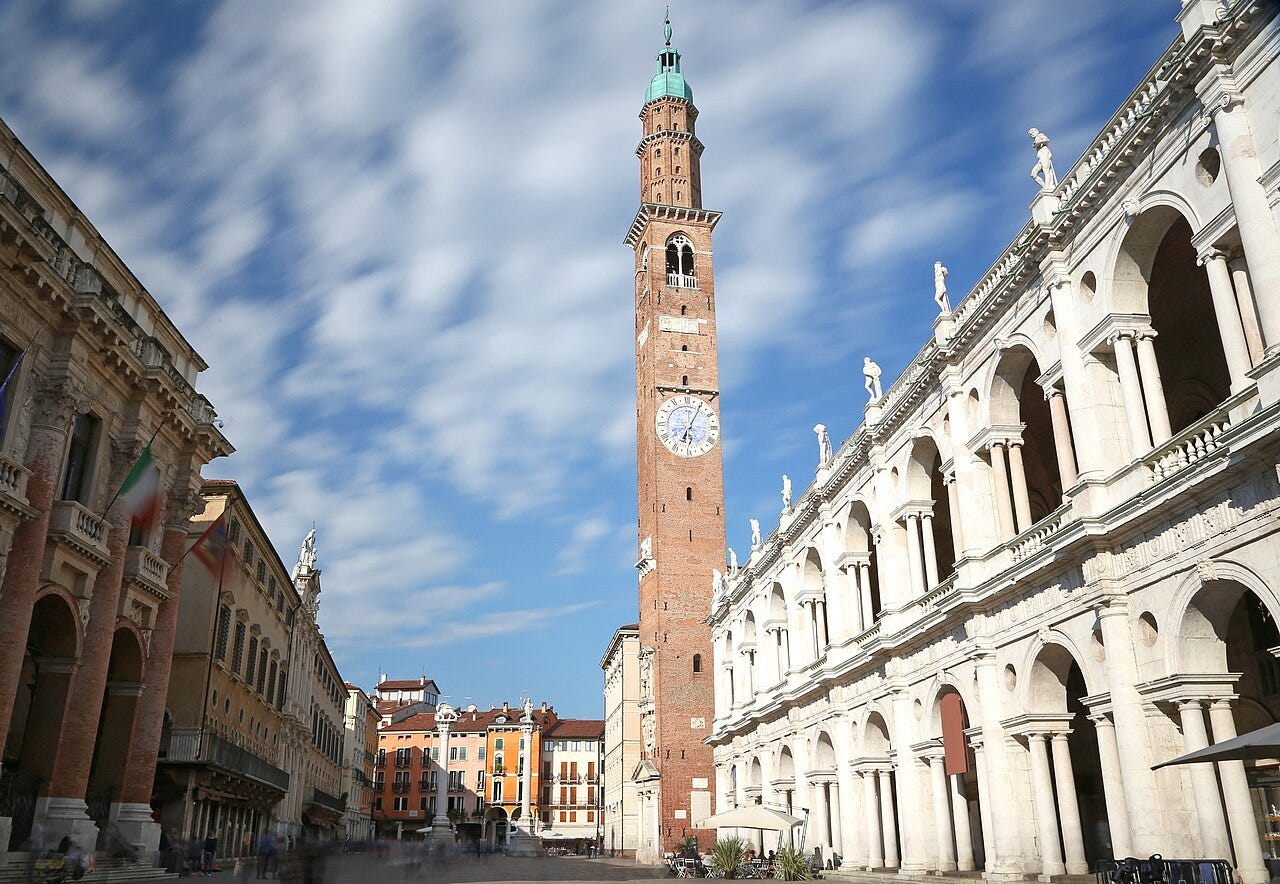
Architecture doesn’t always require foliage. I moved to New Orleans from Vicenza, Italy, where I spent six years strolling through stone piazza, gazing up at Andrea Palladio’s statues, often without a tree in sight. But extensive greenery becomes necessary in some environments, and for some aesthetics, as I wrote in my previous “Architectural Studies” post:
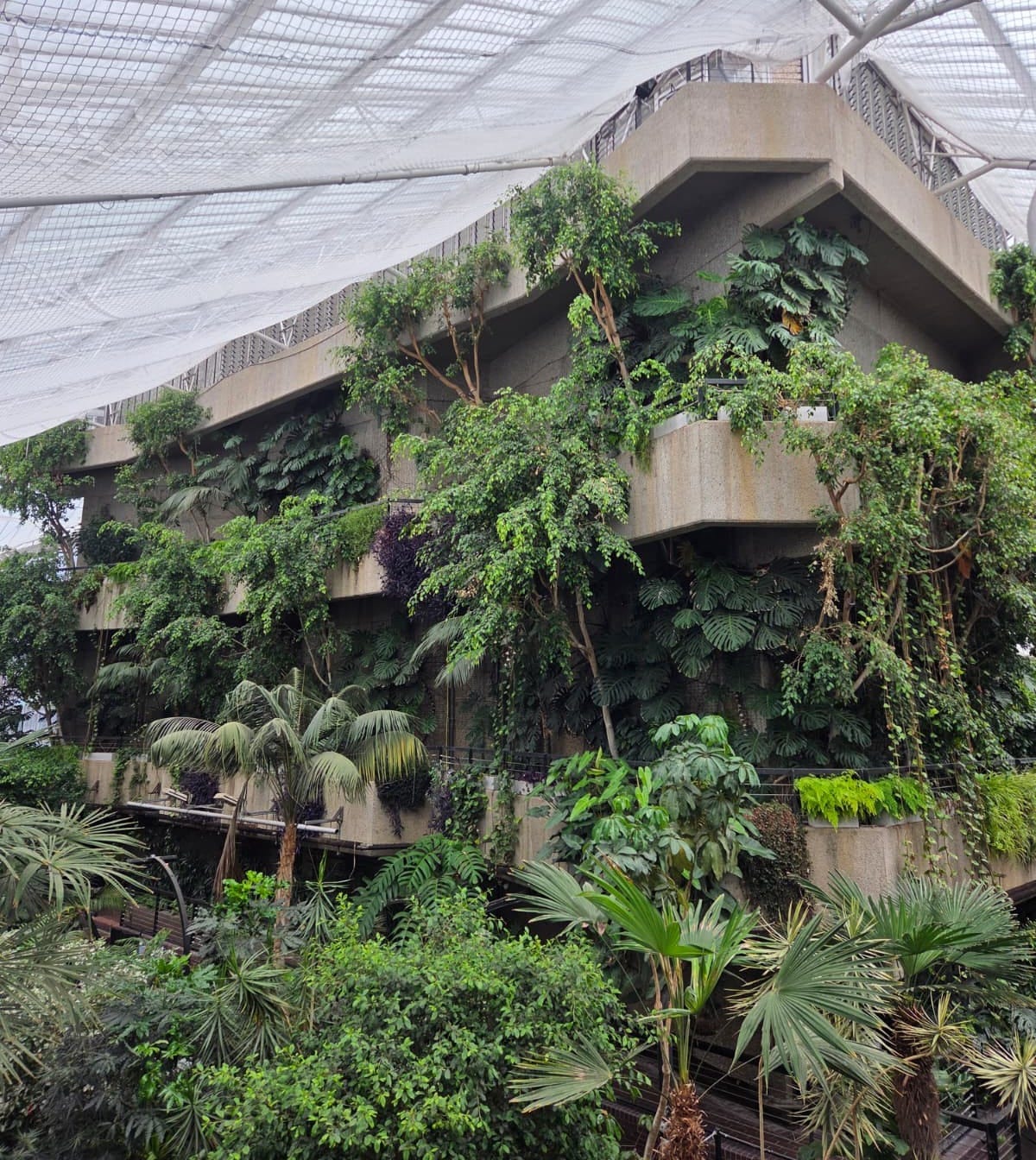
The interaction between foliage and architecture obviously impacts how we experience buildings, but out of all the architectural styles, this may be most true for Brutalism. Plants elevate and soften the austere, rectilinear concrete. A quintessential example is the Barbican Conservatory in London, a garden encased in concrete and glass. When buildings become oversized concrete planters, Brutalism seems less brutal.
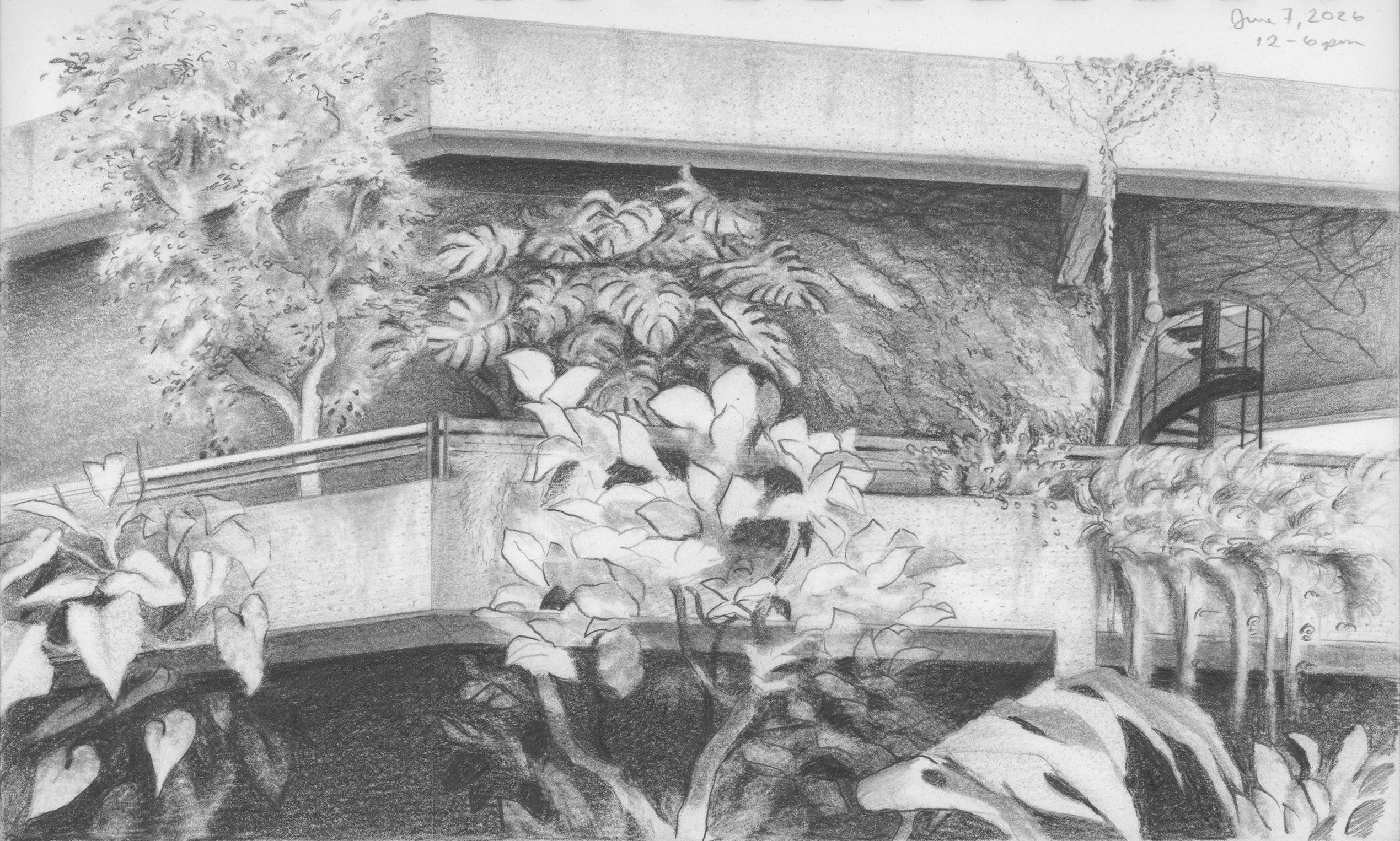
So when I visited the Barbican in London earlier this month, I focused on the plants. Beyond the Conservatory, where I spent all afternoon drawing, the entire estate has extensive landscaping and flowers tumble down the many balconies. Today, residents may grow whatever they like on their balconies, but in earlier decades, they were restricted to red geraniums because of the carefully considered landscaping choices.
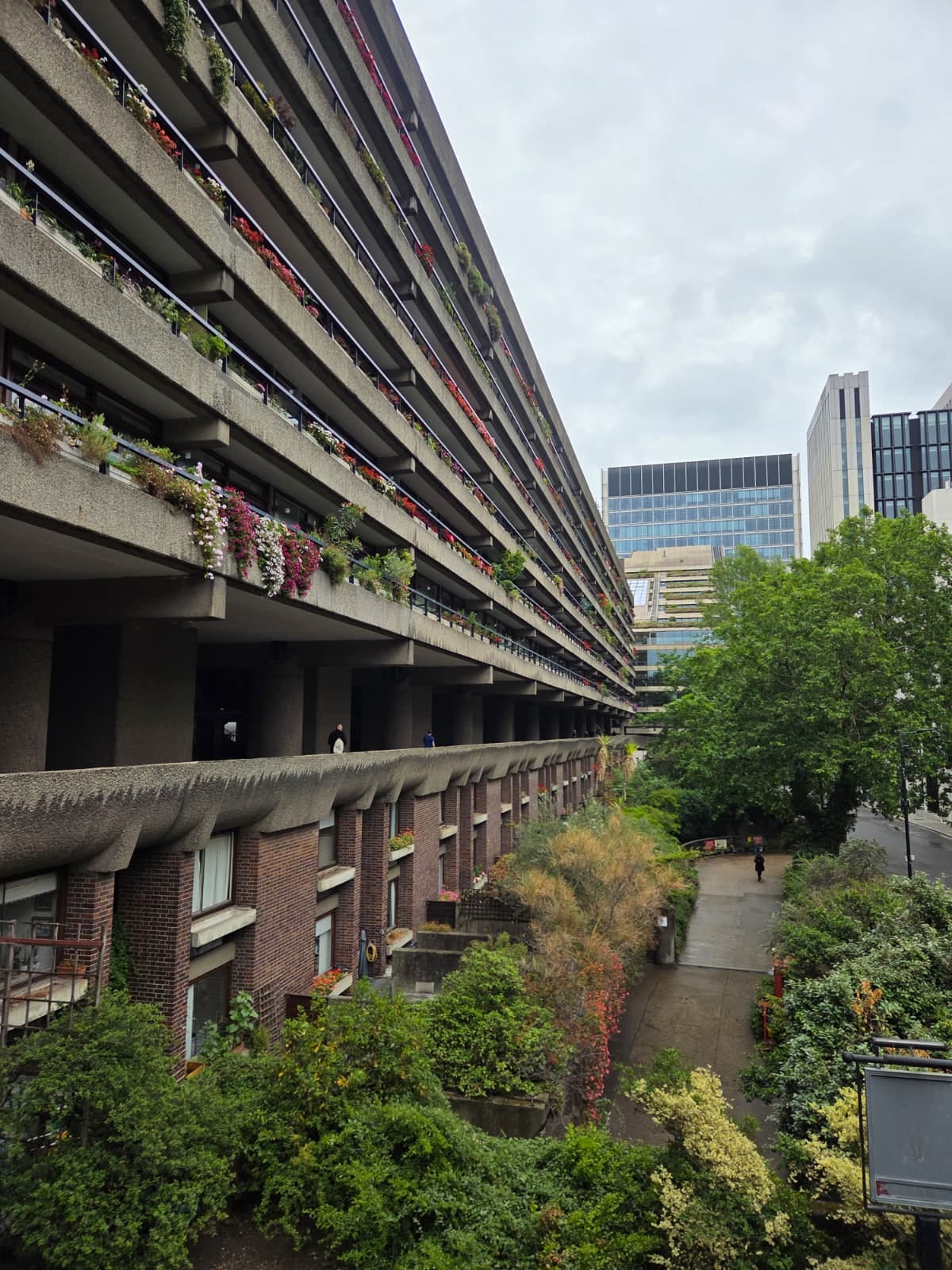
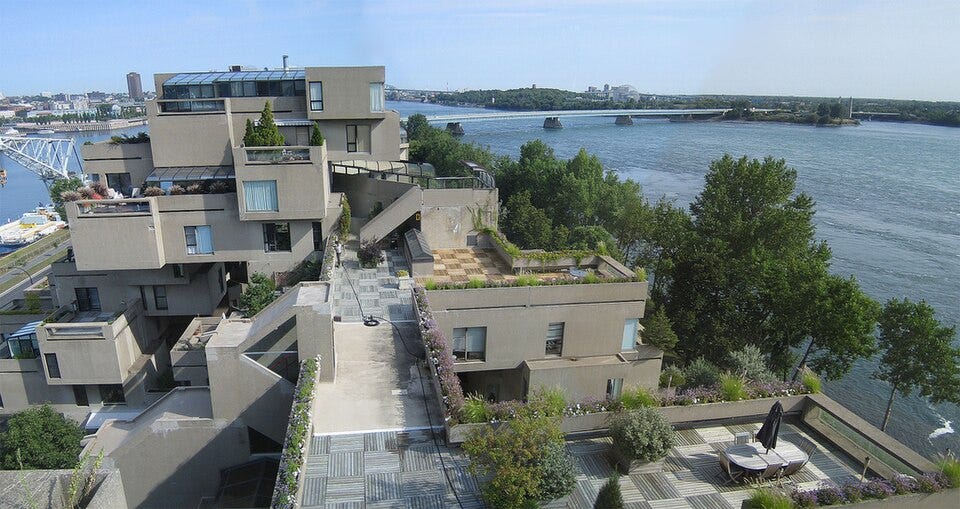
Brutalism was born in 1950s London as an anti-ornamental style, but quite often, foliage becomes its architectural ornamentation. Notably, when Brutalism apologists point to the best examples of the style, they cite buildings that deviate from its anti-ornamental roots. Habitat 67 in Montreal, for example, is a common favorite that also has extensive landscaping built into its design, but architect Moshe Safdie has long tried to fend off the Brutalist label:
I don’t think of Habitat as Brutalist at all. In fact, at the time people were doing what has come to be known as Brutalist architecture, the idea was utilizing a rough concrete. I think of the works of Rudolph with the corduroy concrete, and his followers, for example, or Le Corbusier in India with really rough concrete. My efforts in Habitat were to make the concrete look as finished and smooth as possible. I went to precasting and carefully sandblasted the surfaces, with the hope that they would look like limestone. I had no interest in the ruggedness and spontaneity of Brutalist construction.
While it coincides with the same time period of Brutalism, conceptually Habitat was not that at all. And I don’t think any of my buildings that followed were anything but an attempt to provide a comfortable, high finish. I think people want to feel and touch architecture, and concrete that cuts their hand is the opposite.
Safdie insists that Habitat 67 is “an anti-Brutalist building, a reaction to Brutalism — it just happened to be built in that period, but it wasn’t a Brutalist building.”
.jpg)
During my architectural tour of the Barbican Estate, the guide repeatedly complained about people alleging it doesn’t count as Brutalism because of its ornamental details. Besides foliage, architects Chamberlin, Powell and Bon designed some of the buildings with thematic nods to their inhabitants: a pencil motif for the City of London School for Girls, tuning forks for the Guildhall School of Music and Drama.
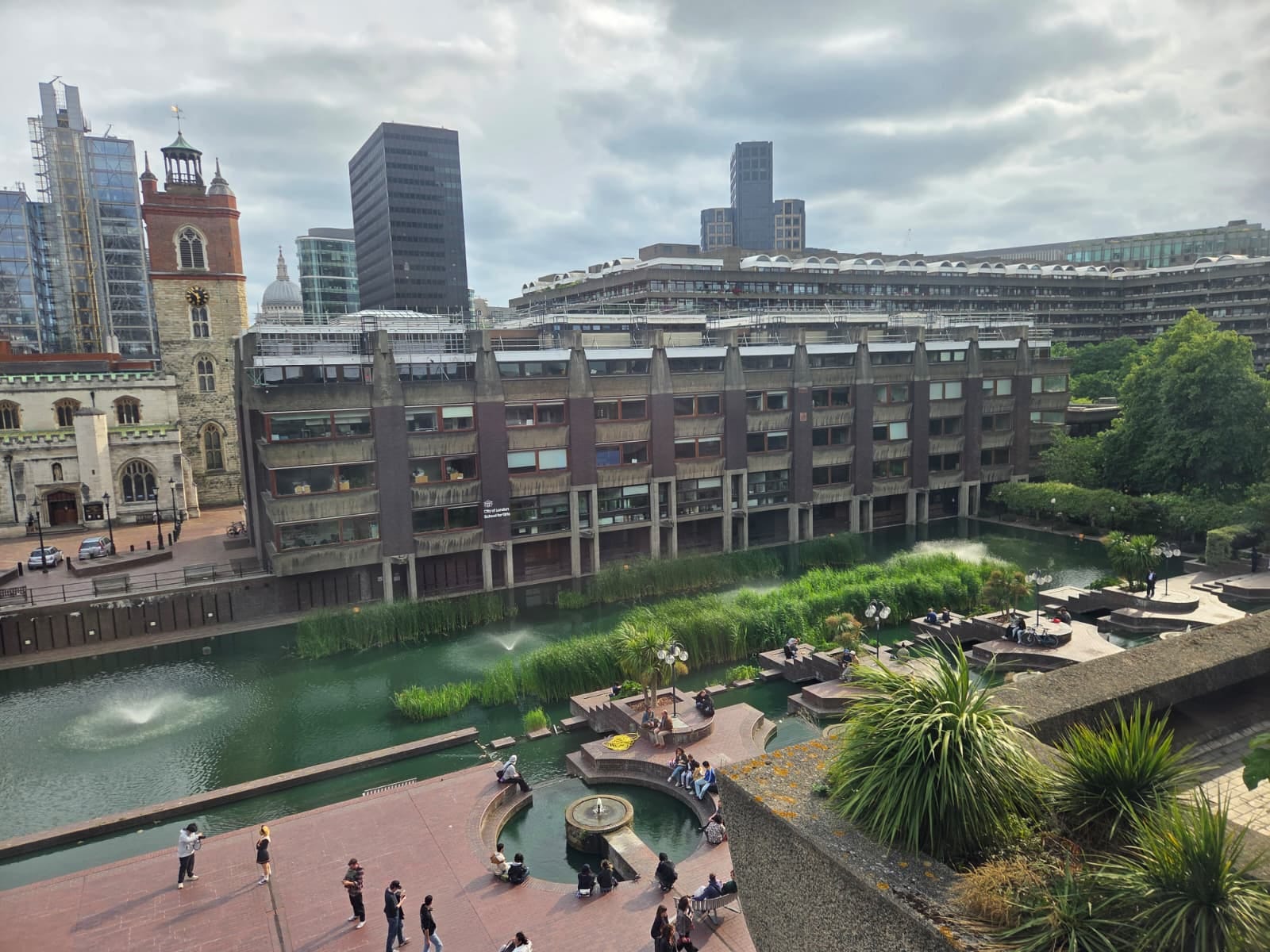
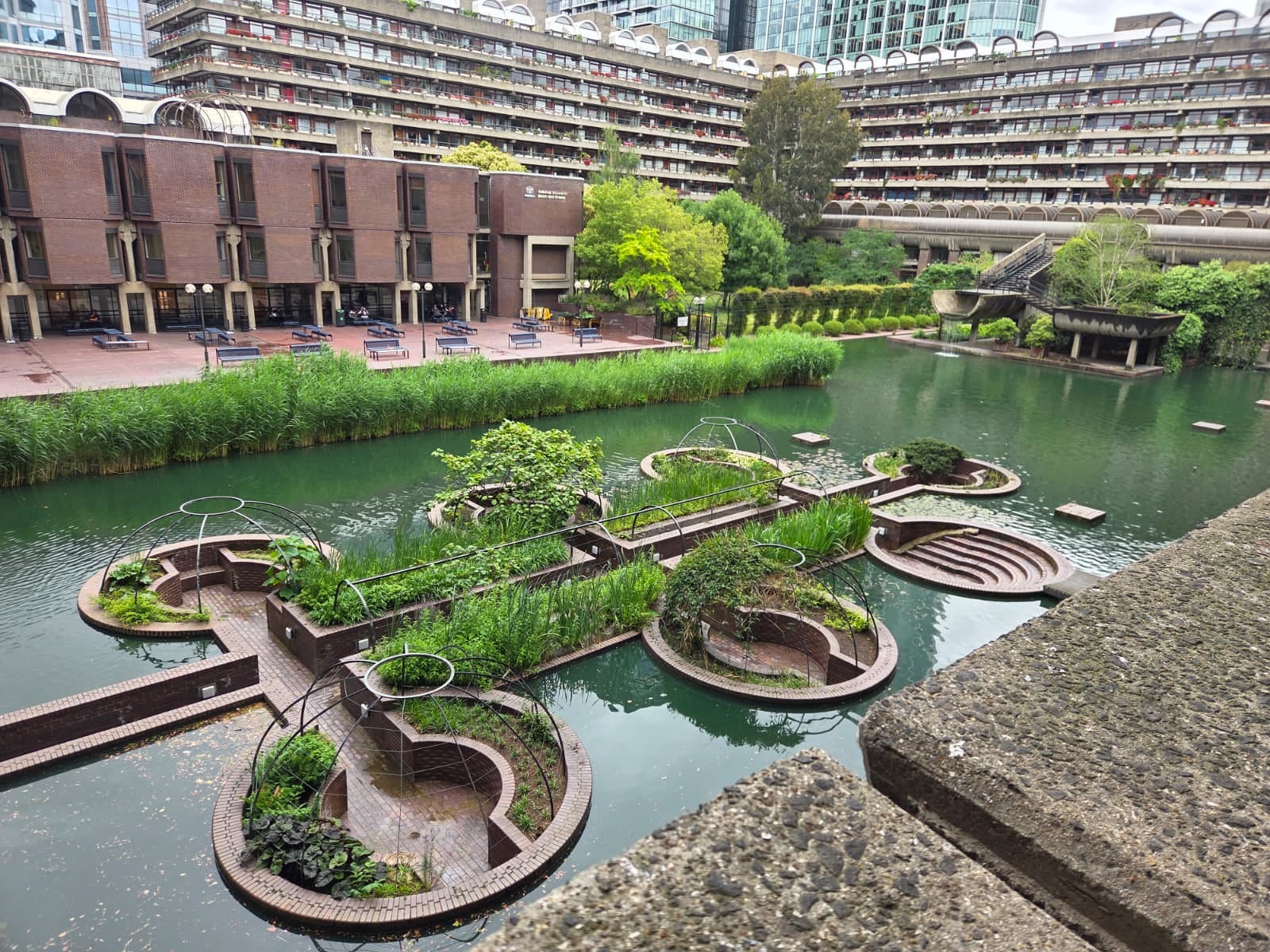
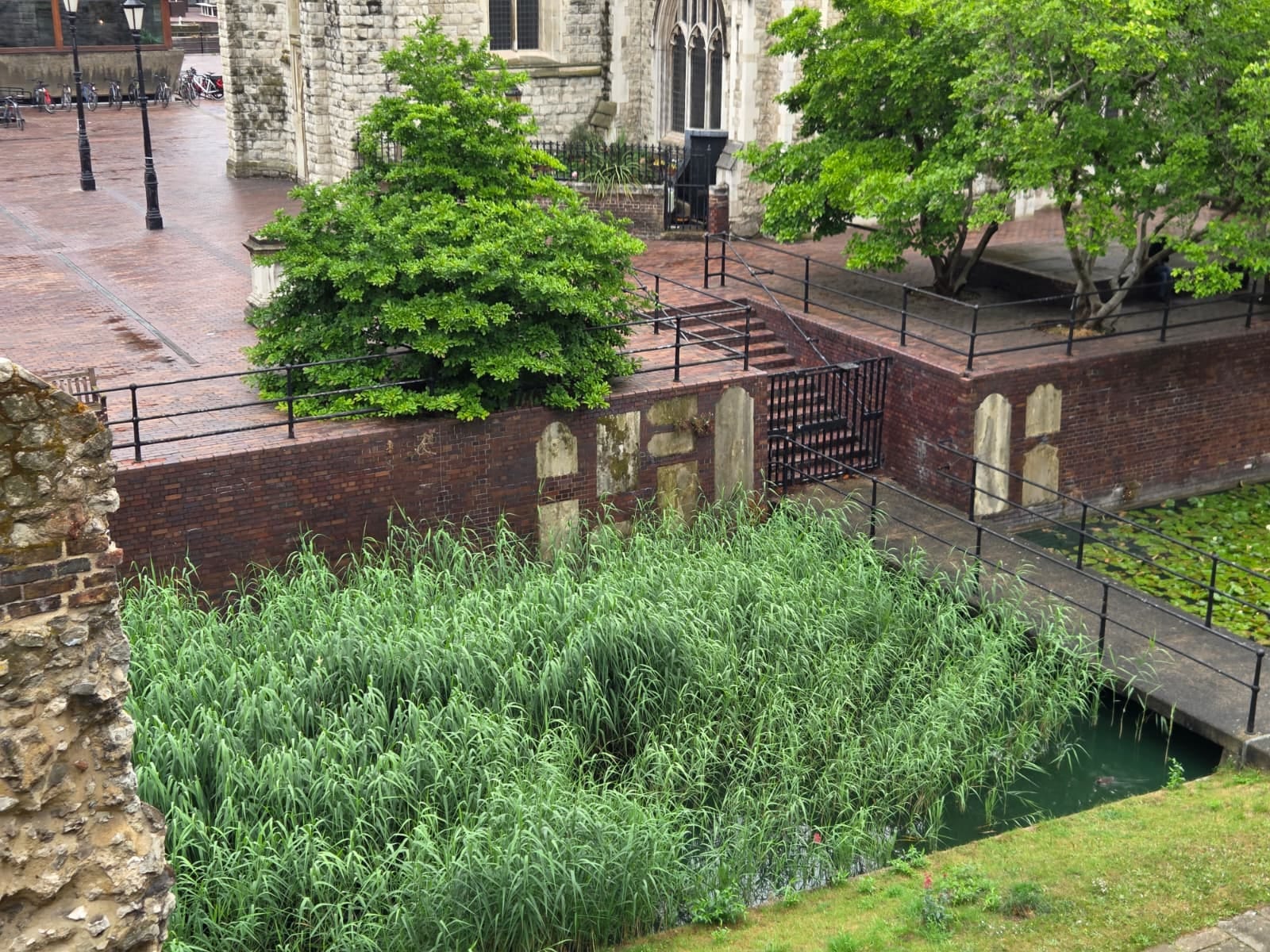
Even the water has a subtle ornamental flourish: it’s dyed green! My guide made a point to mention that it’s safe for the ducks. Other details were designed to respect the site’s history, such as the tombstones included out of respect for the ancient graves exhumed during construction, and the arrow slit windows that pair with the castle aesthetic of the medieval church that stands near the center of the Barbican Estate.
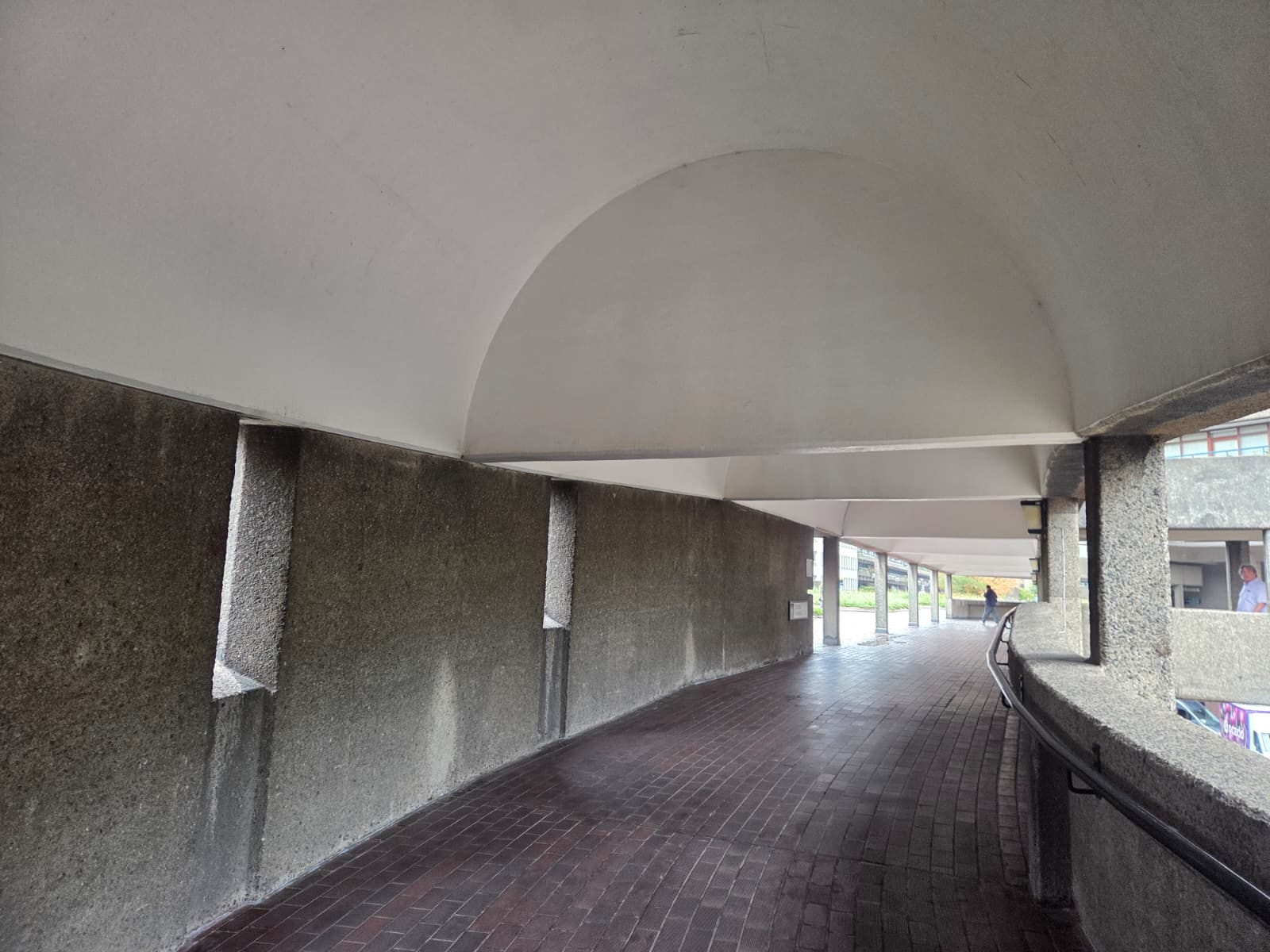
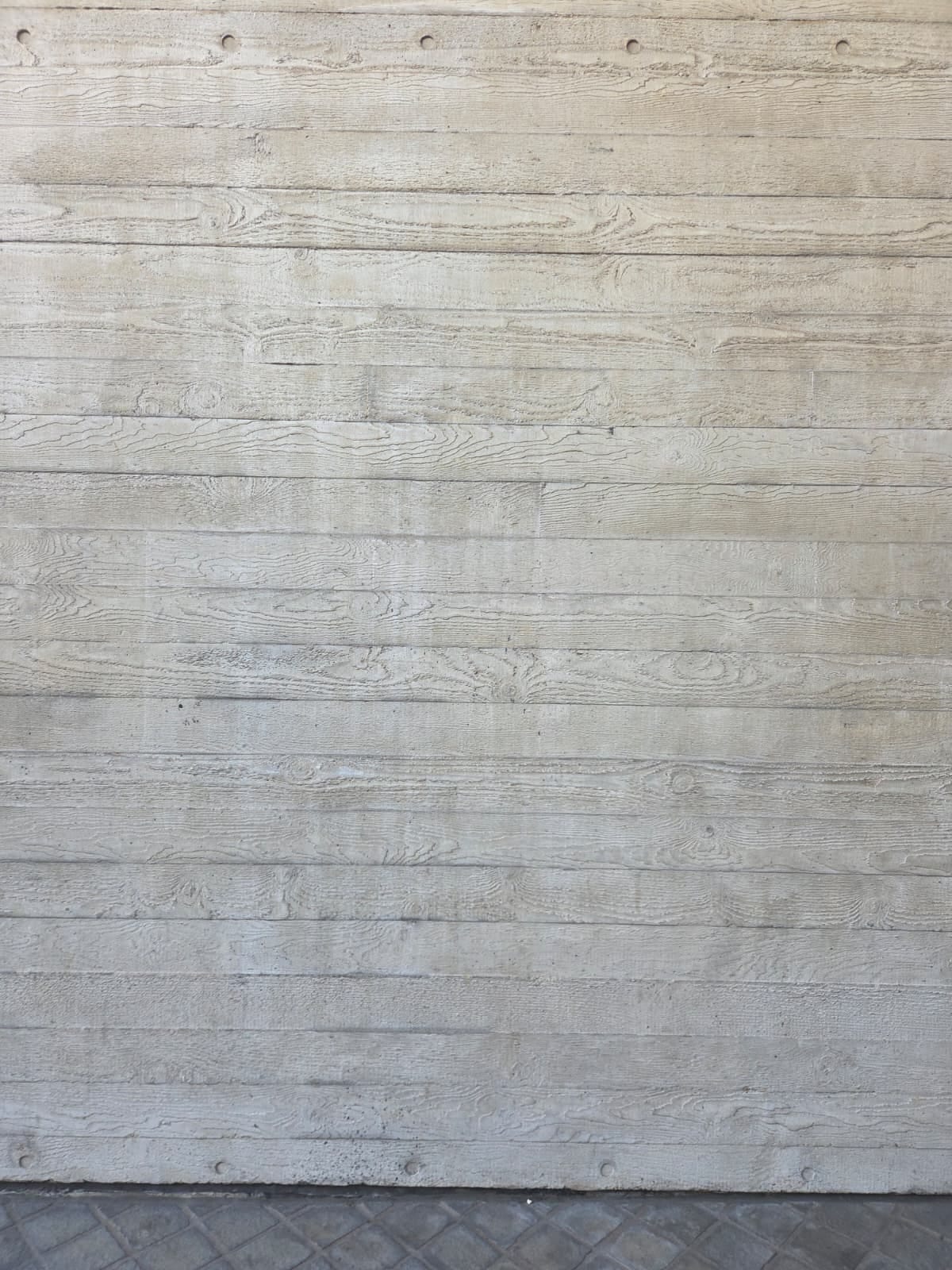
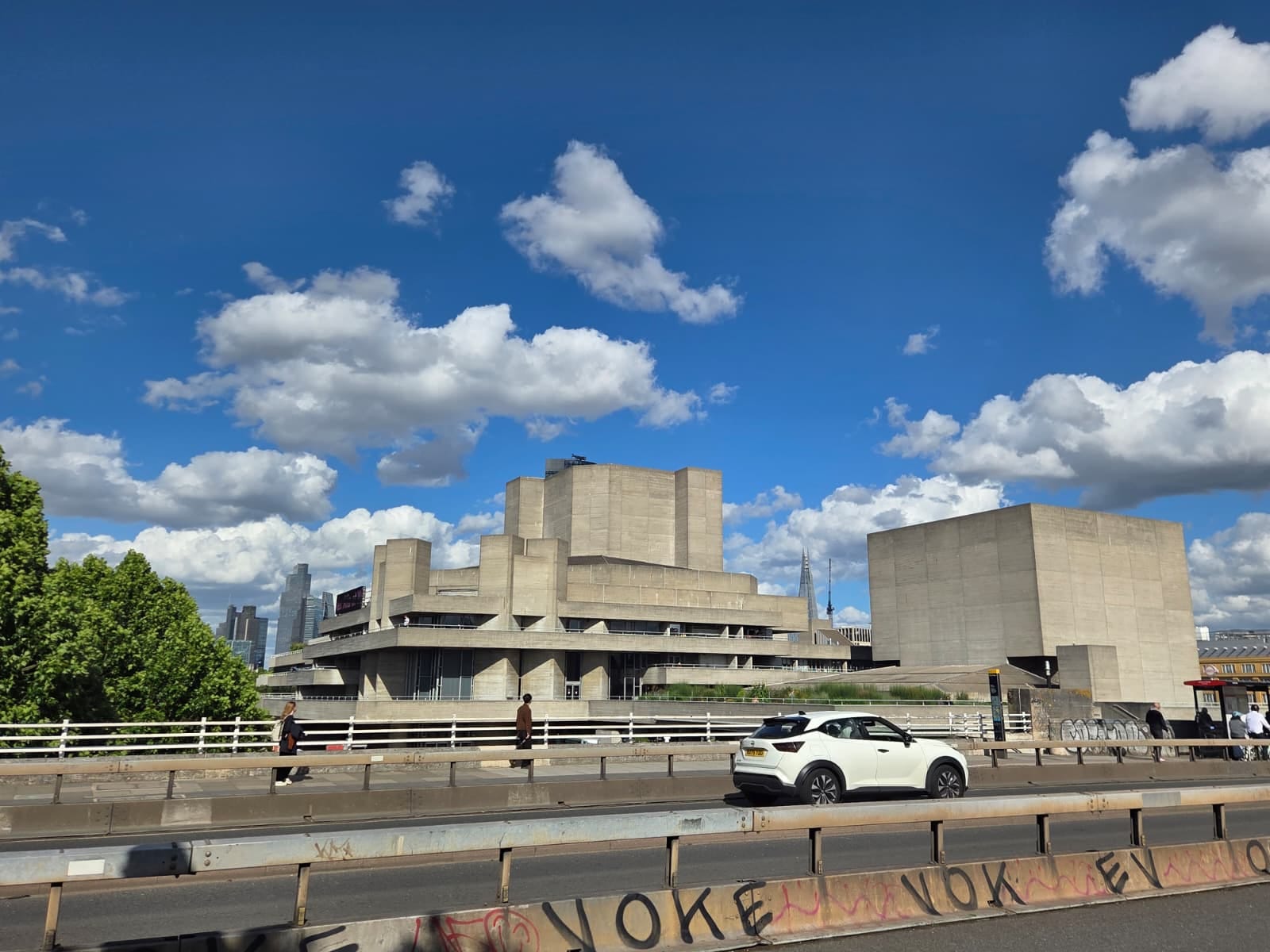
There are also areas where the concrete has wood grain patterns imprinted on its surface from the casting process, which were left as an intentional ornamental detail. Across the River Thames, the National Theatre is another Brutalist landmark in London famous for similar wood grain impressions.

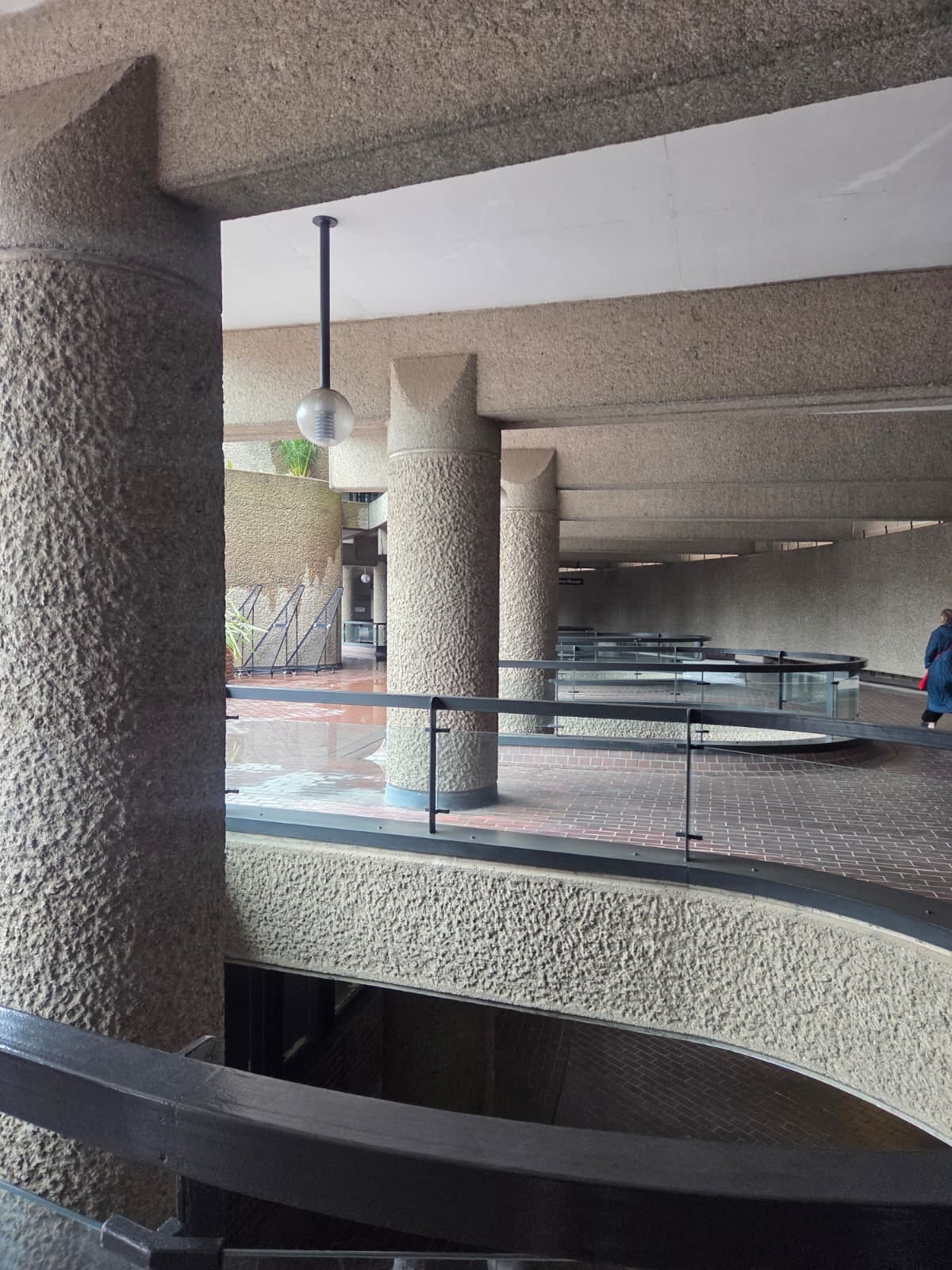
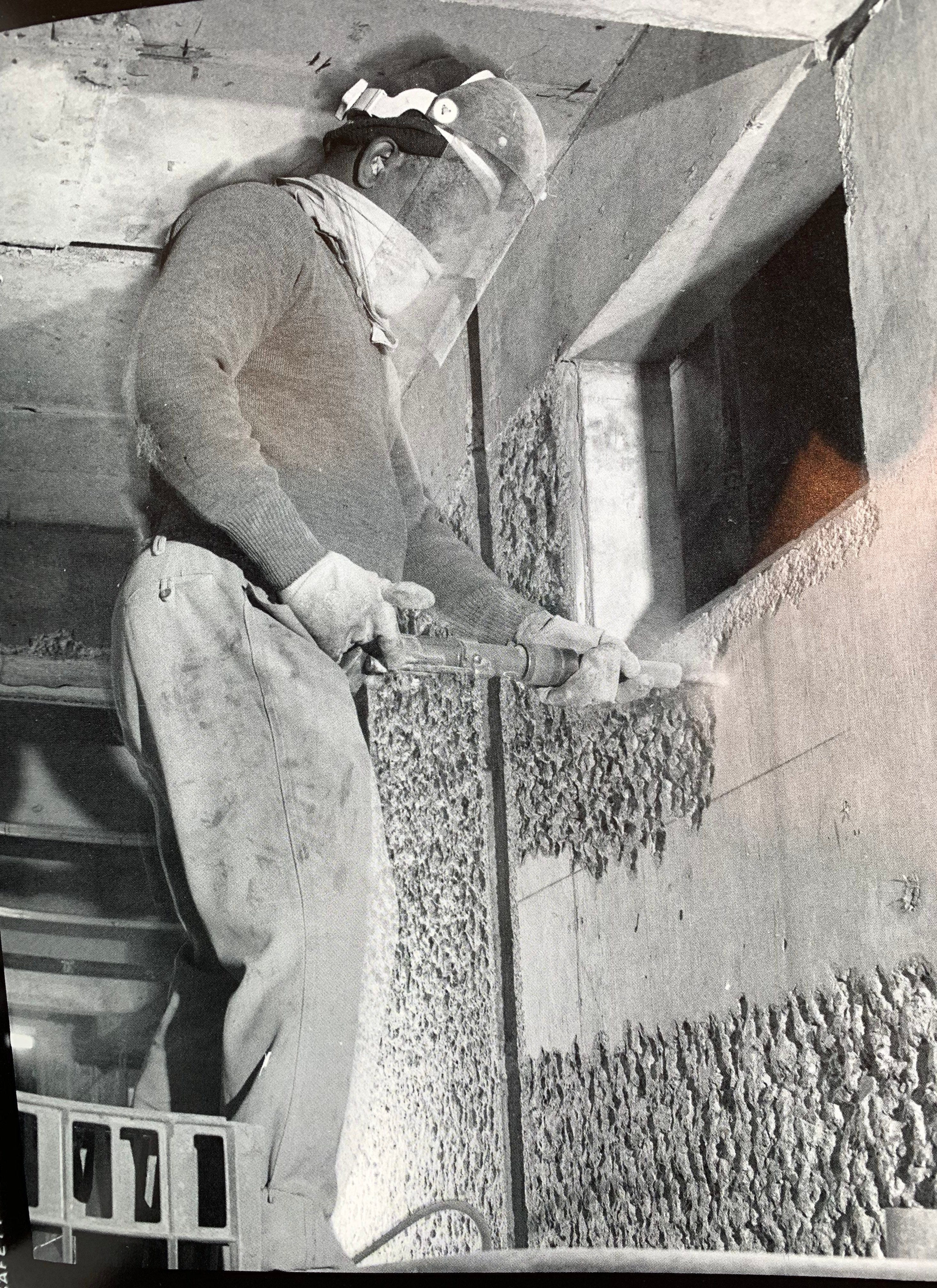
But the most widespread example of subtle ornamentation at the Barbican is the textured concrete. A select group of craftsmen spent 11 years developing the surfaces with pneumatic drills; after all that time, many of them permanently lost feeling in their fingertips from long hours of vibration over so many years, and they developed lung diseases from inhaling dust. The texture helps reveal the blue granite embedded in the concrete.
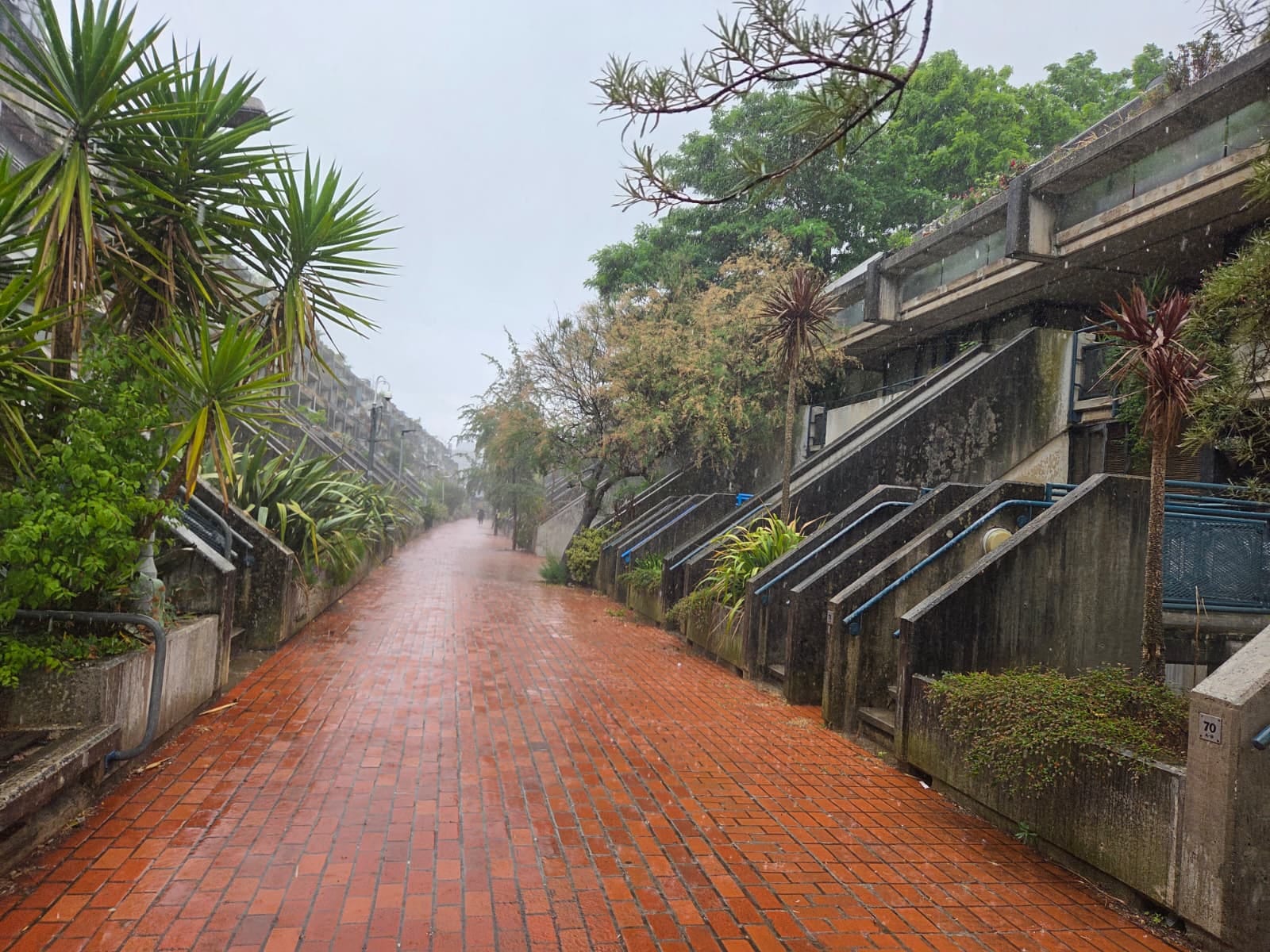
The other Brutalist landmark I most enjoyed visiting was the Alexandra and Ainsworth Estate in Camden. I arrived under a heavy rain, which enhanced the dystopian jungle vibe. Again, it’s all about the plants as architectural ornamentation.
When I imagine living on Alexandra Road or at the Barbican, I think the extensive greenery would make it tolerable for me. But once the geraniums have died and the balconies are bare, I would want to flee. So I’m glad I visited during springtime, and I’m curious to return in the winter.
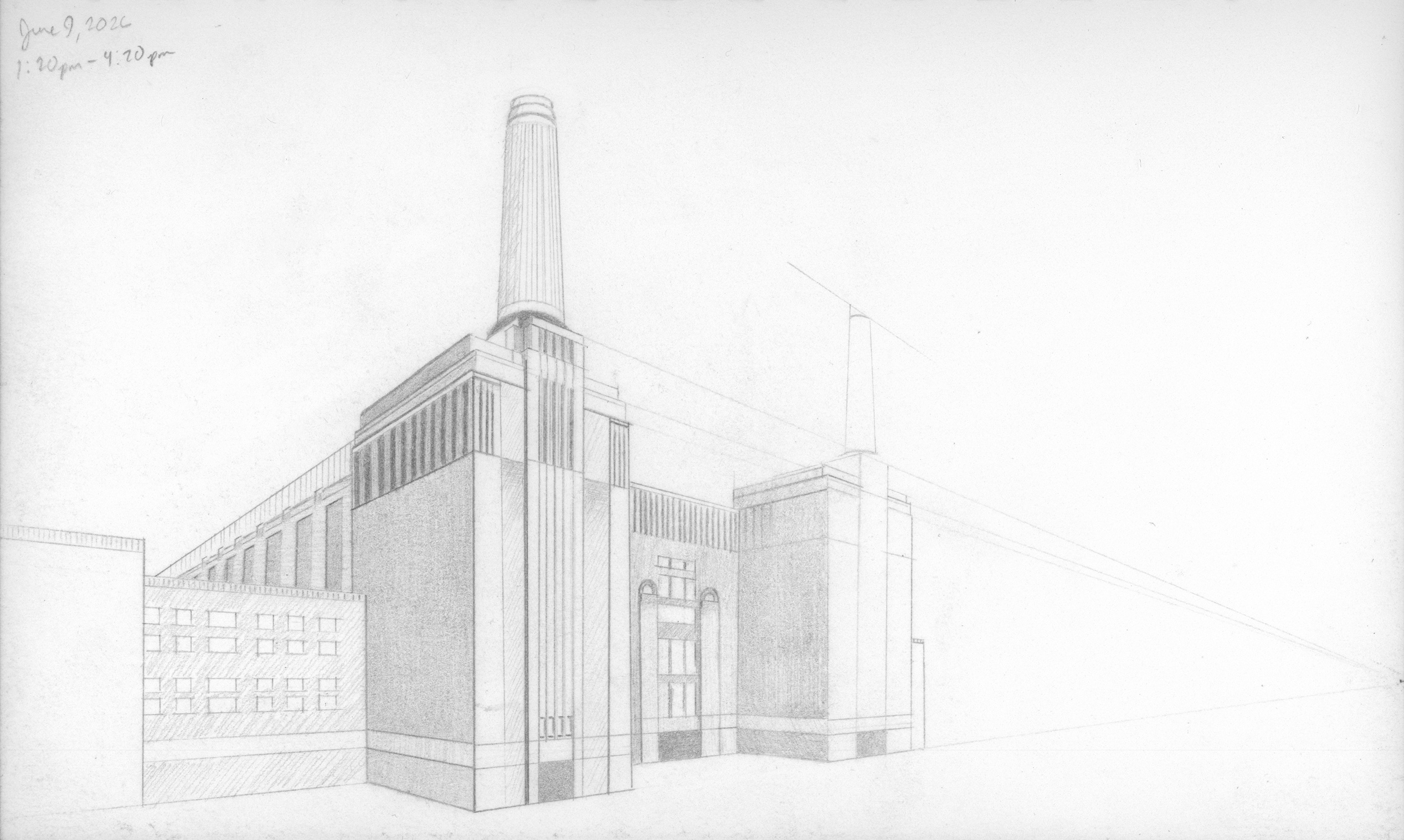
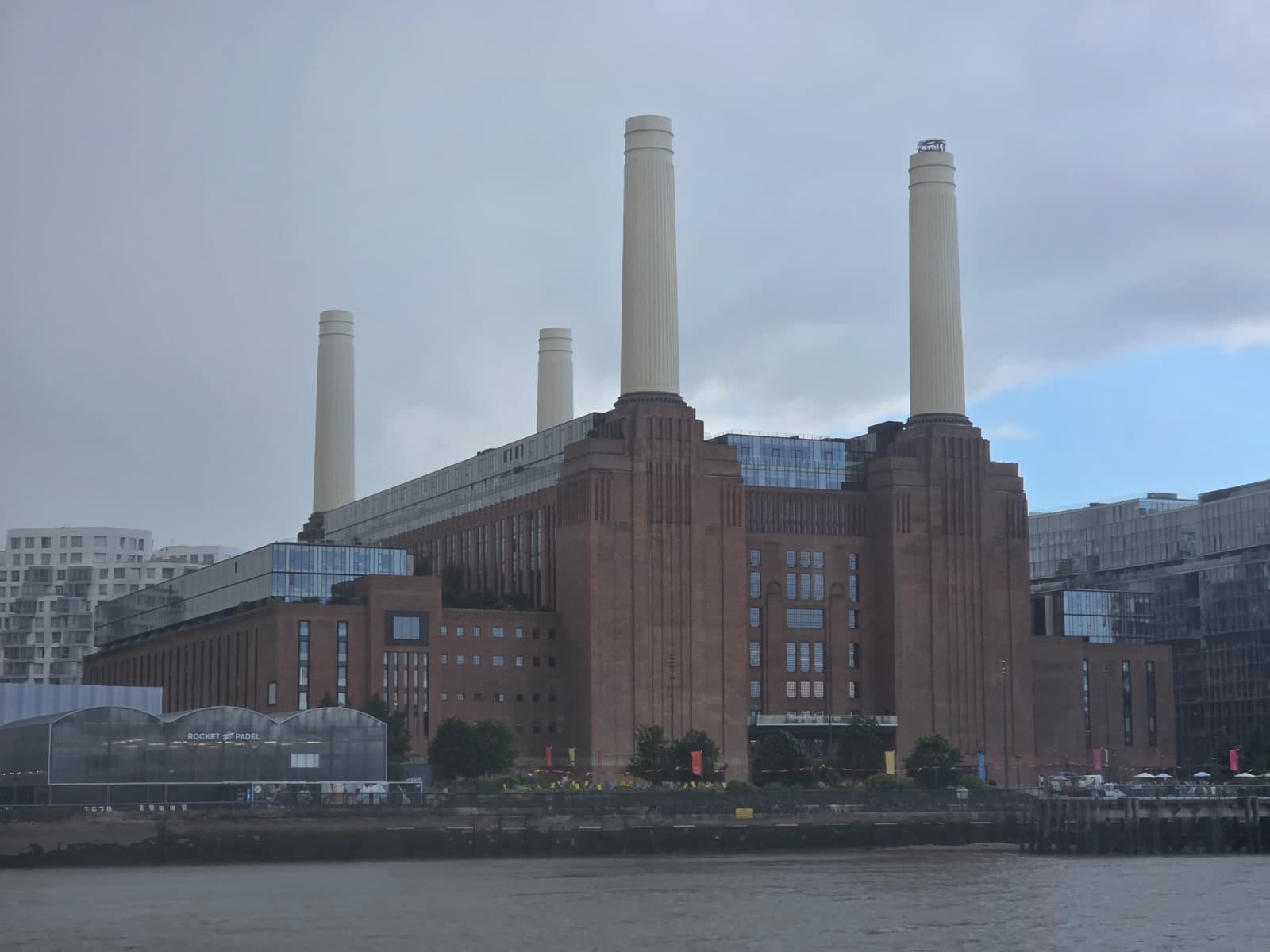
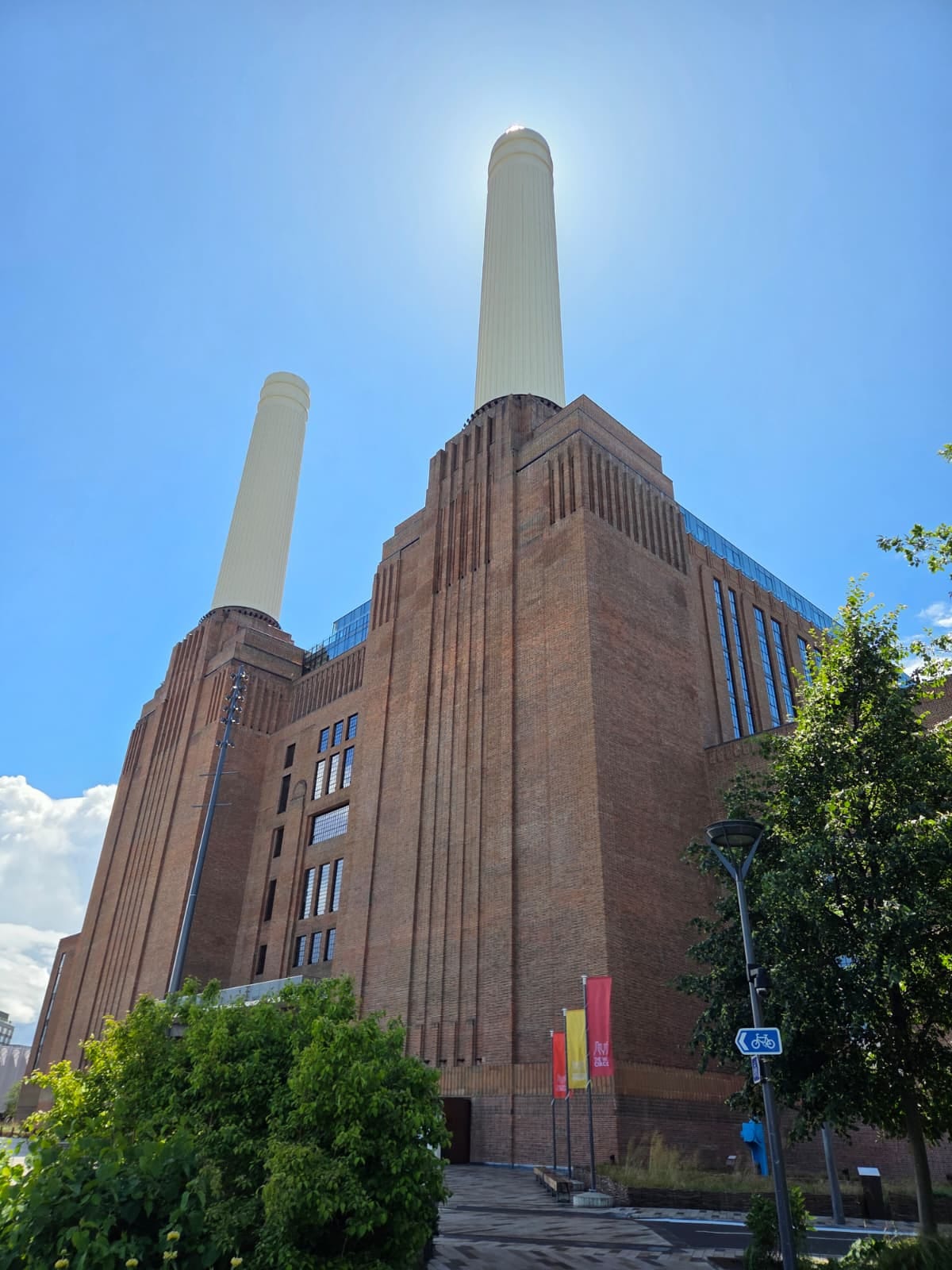
While in London, I also sought out Art Deco because it’s my favorite style of ornamental architecture. There isn’t much in London, and it’s far less ornate than in New York. The best example I visited was the Battersea Power Station, a pair of decommissioned coal plants that were recently renovated into a shopping mall. Old brick industrial buildings are also romantic to me, so experiencing a monumental Art Deco version of that was a treat. It was built out of six million bricks, and it’s one of the largest brick buildings in the world.
True to the city’s reputation, it rained buckets during my entire trip to London. It was raining in the morning as I approached Battersea, but by the time I crossed the Thames, the clouds finally parted and I got to enjoy a single sunny afternoon drawing outdoors.
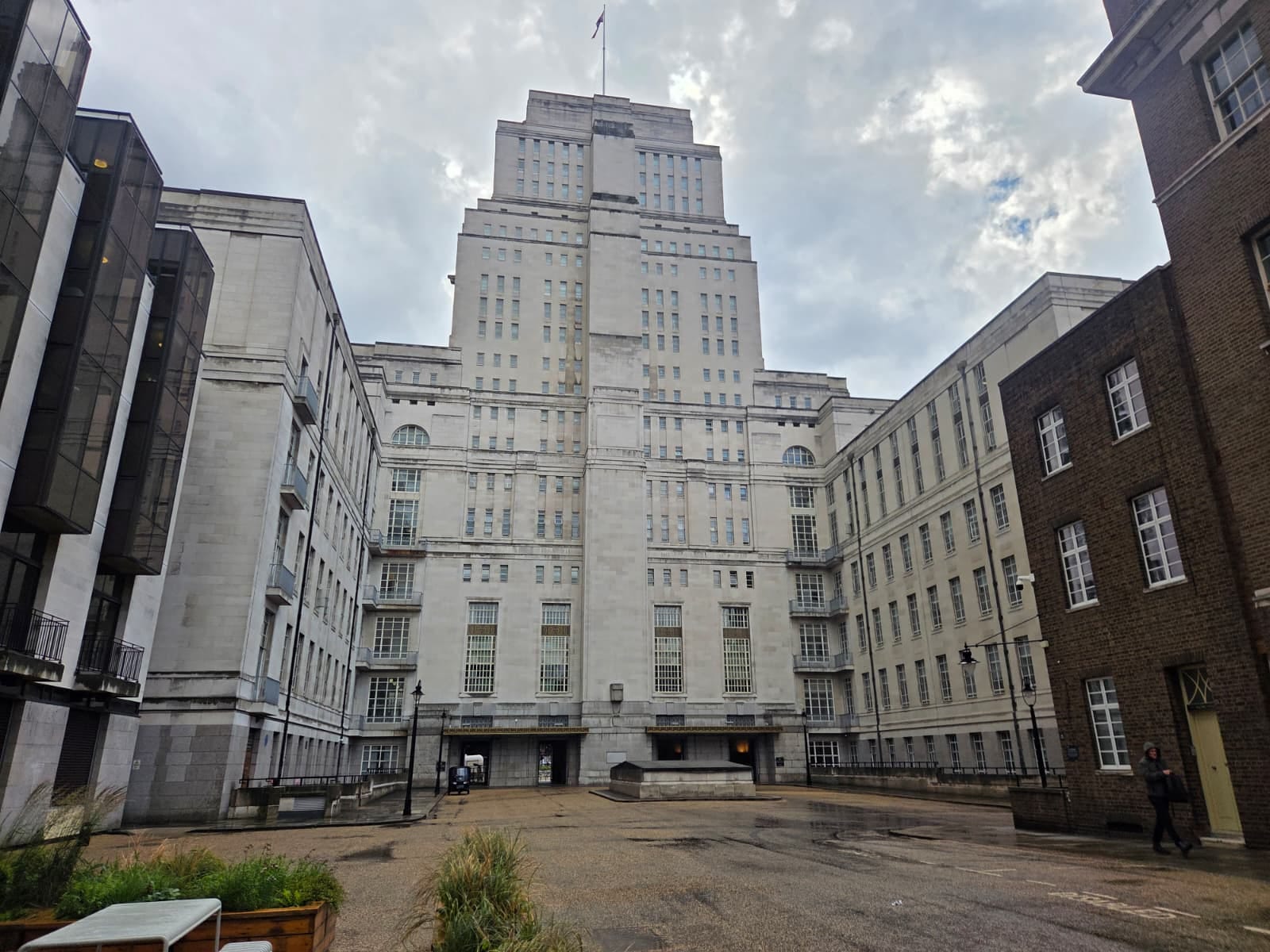
The next most interesting Art Deco building that I visited in London was the Senate House, which is part of the University of London. It inspired George Orwell’s description of the Ministry of Truth in 1984. This goes to show how much more austere London Art Deco tends to feel compared to the opulence of New York.
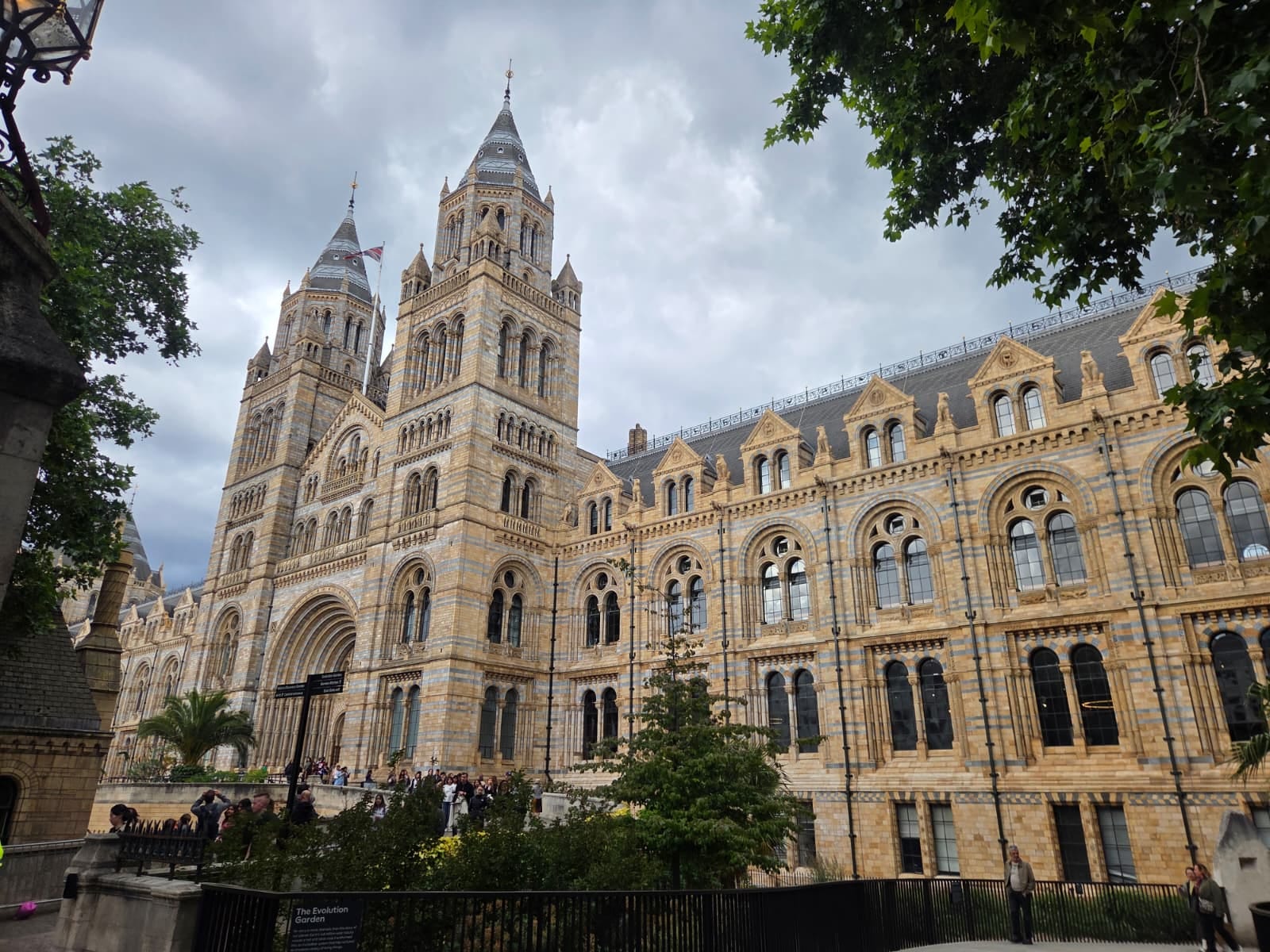
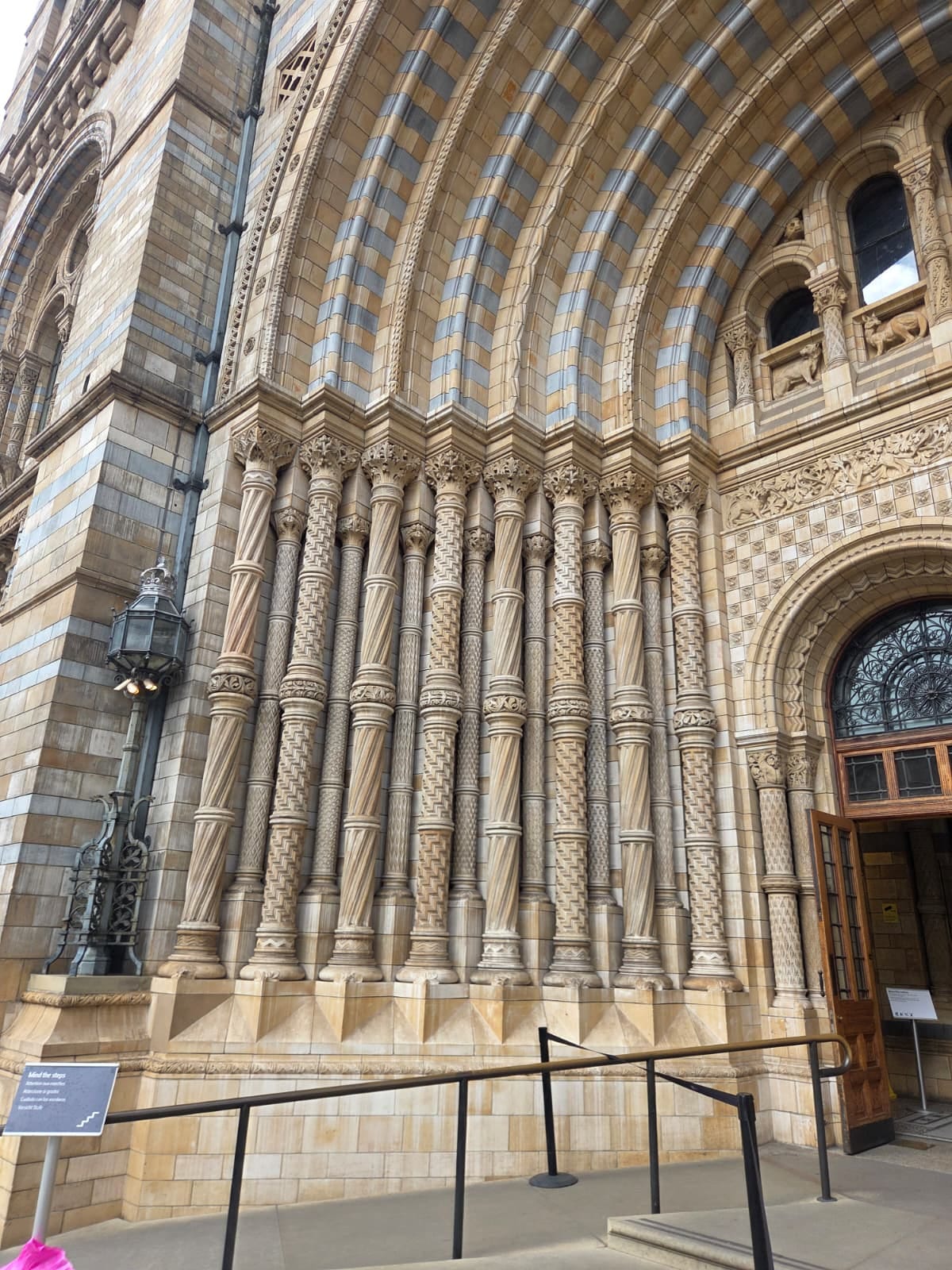
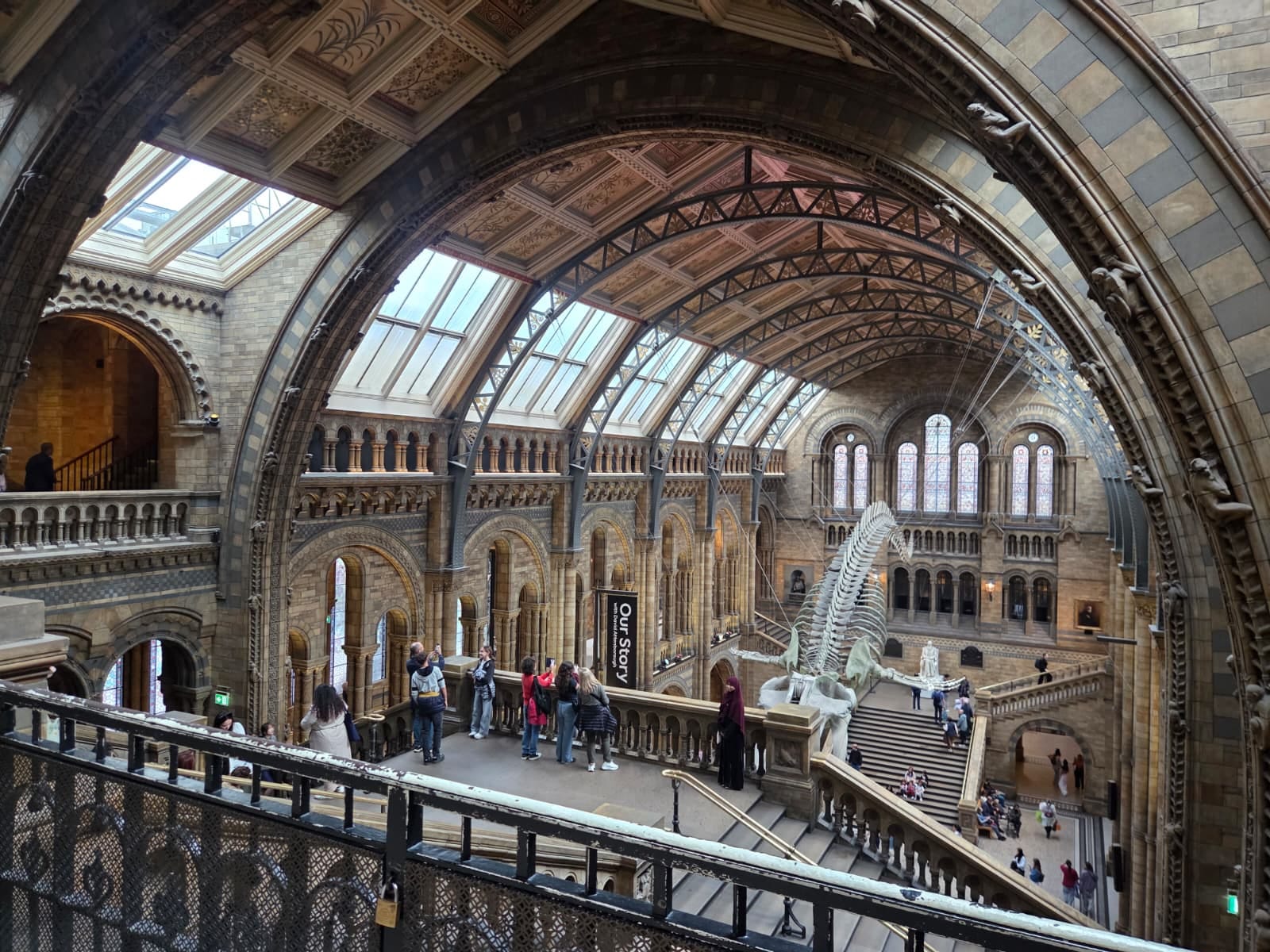
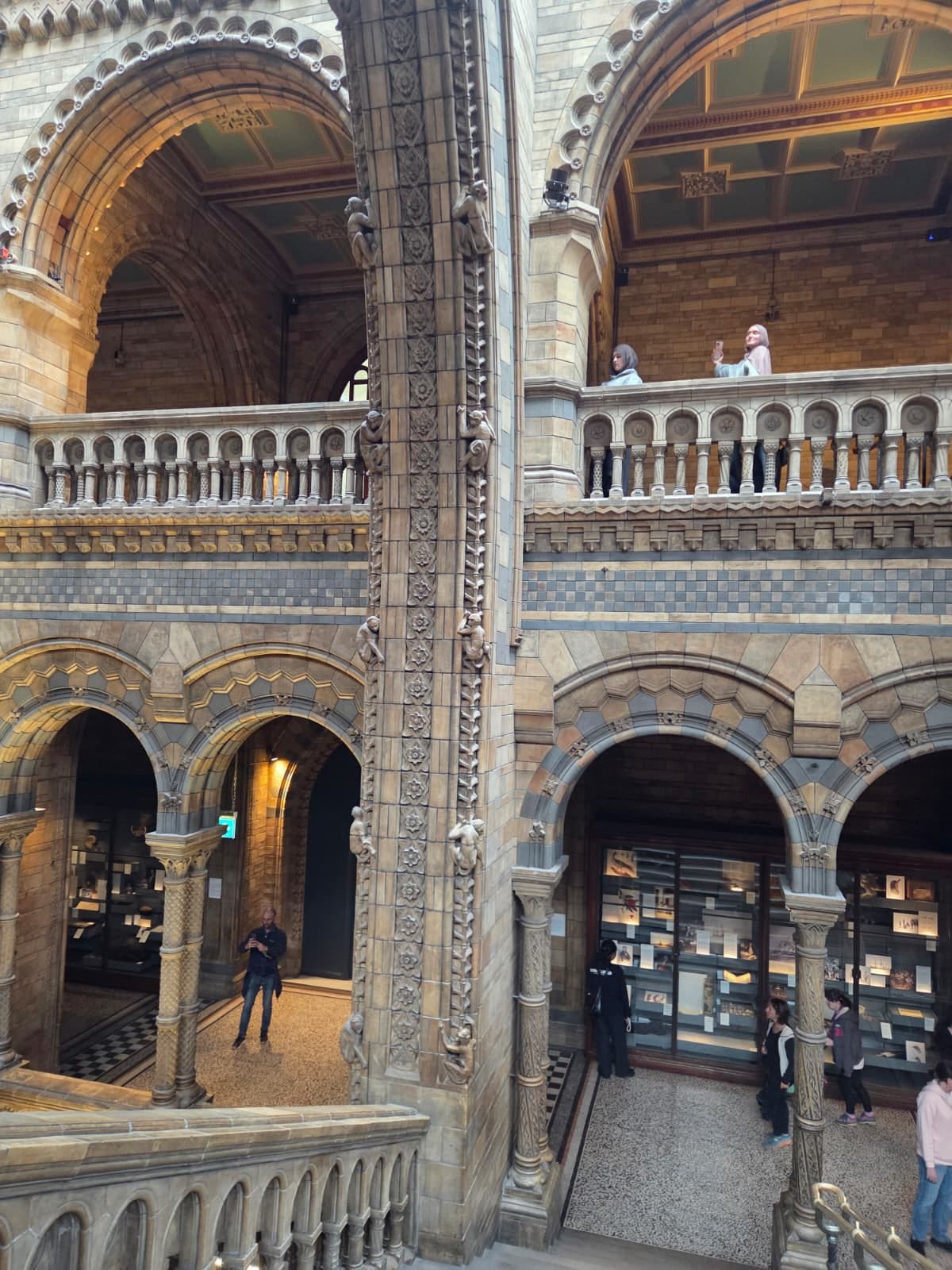
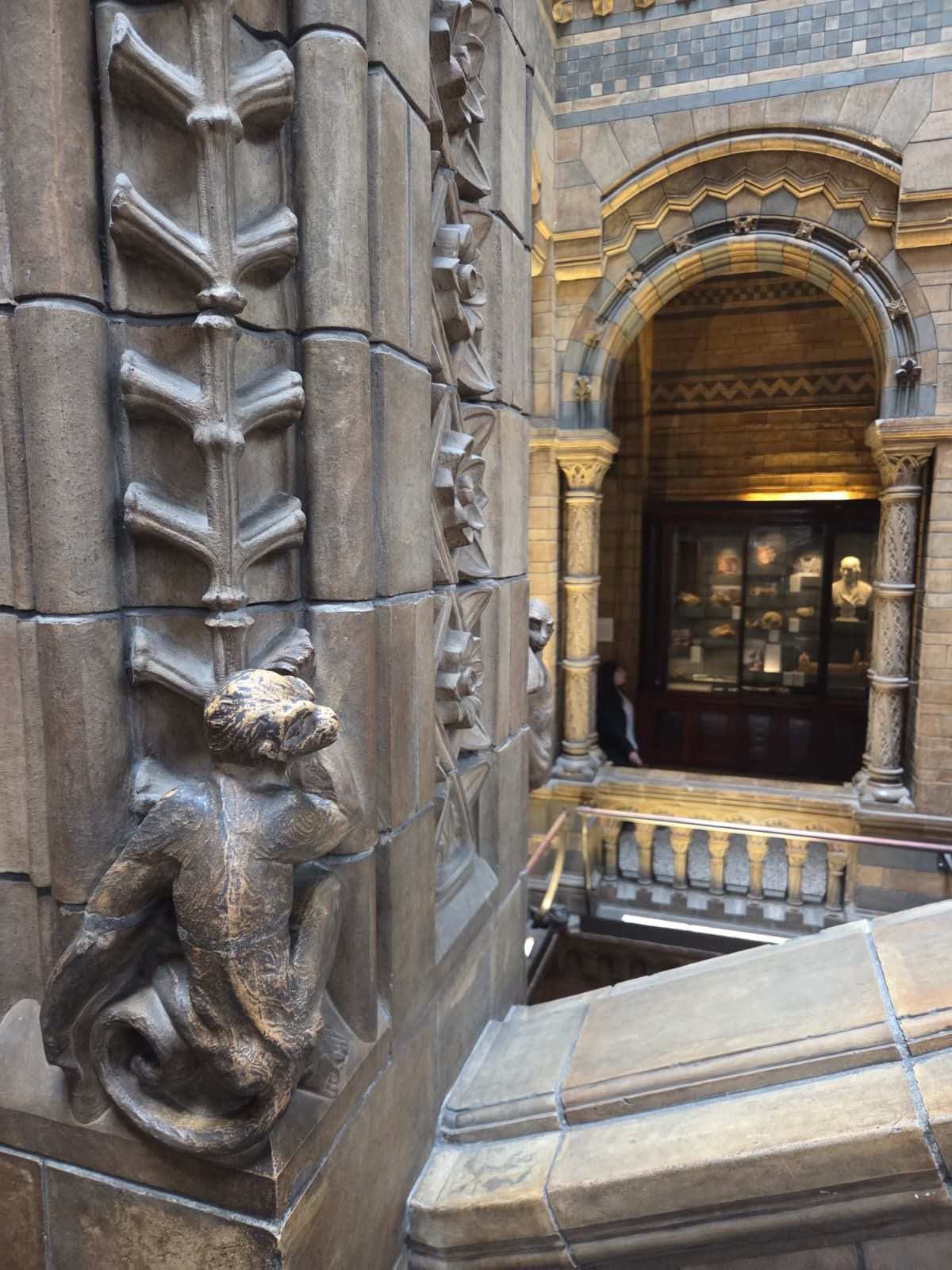
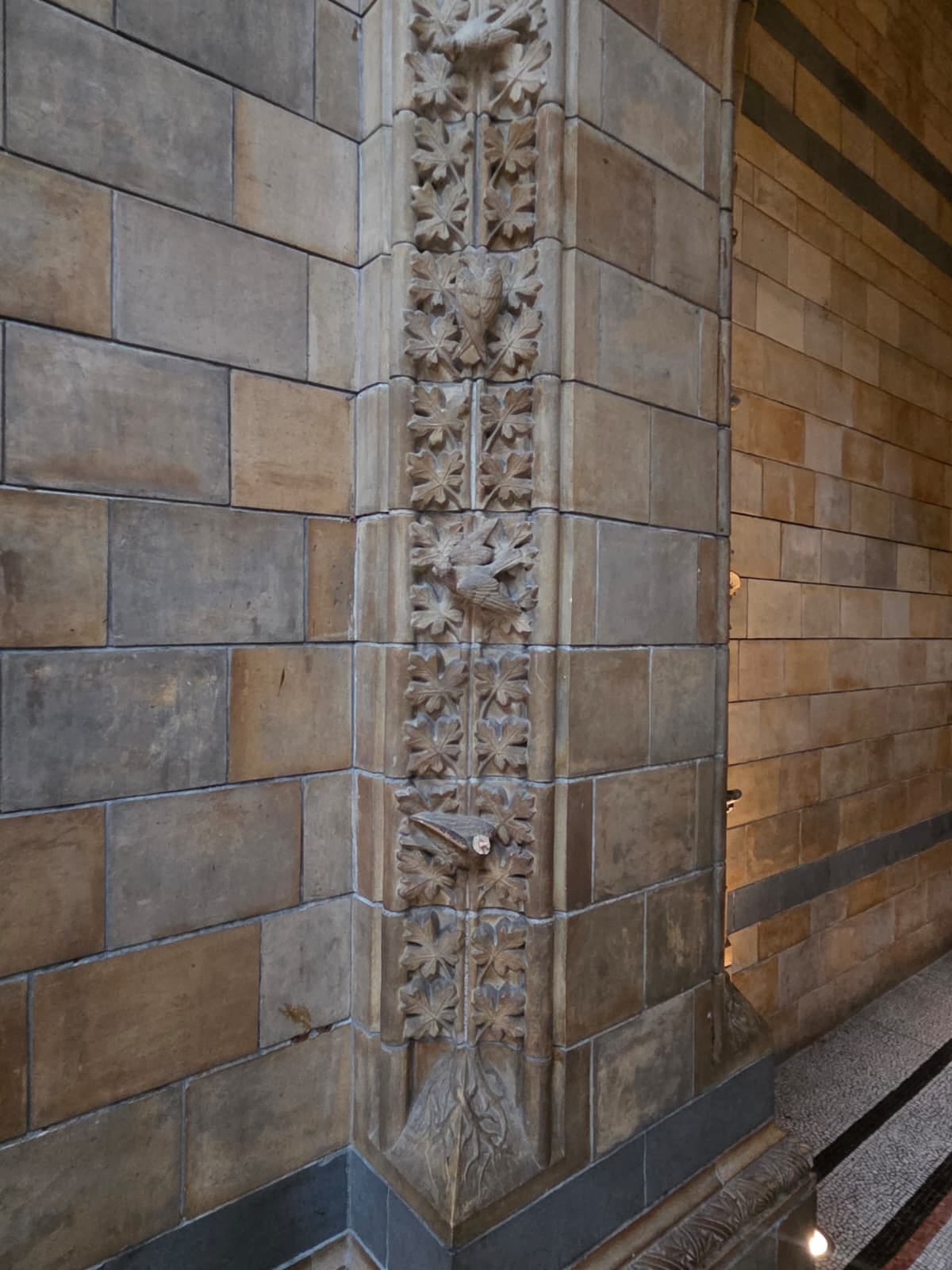
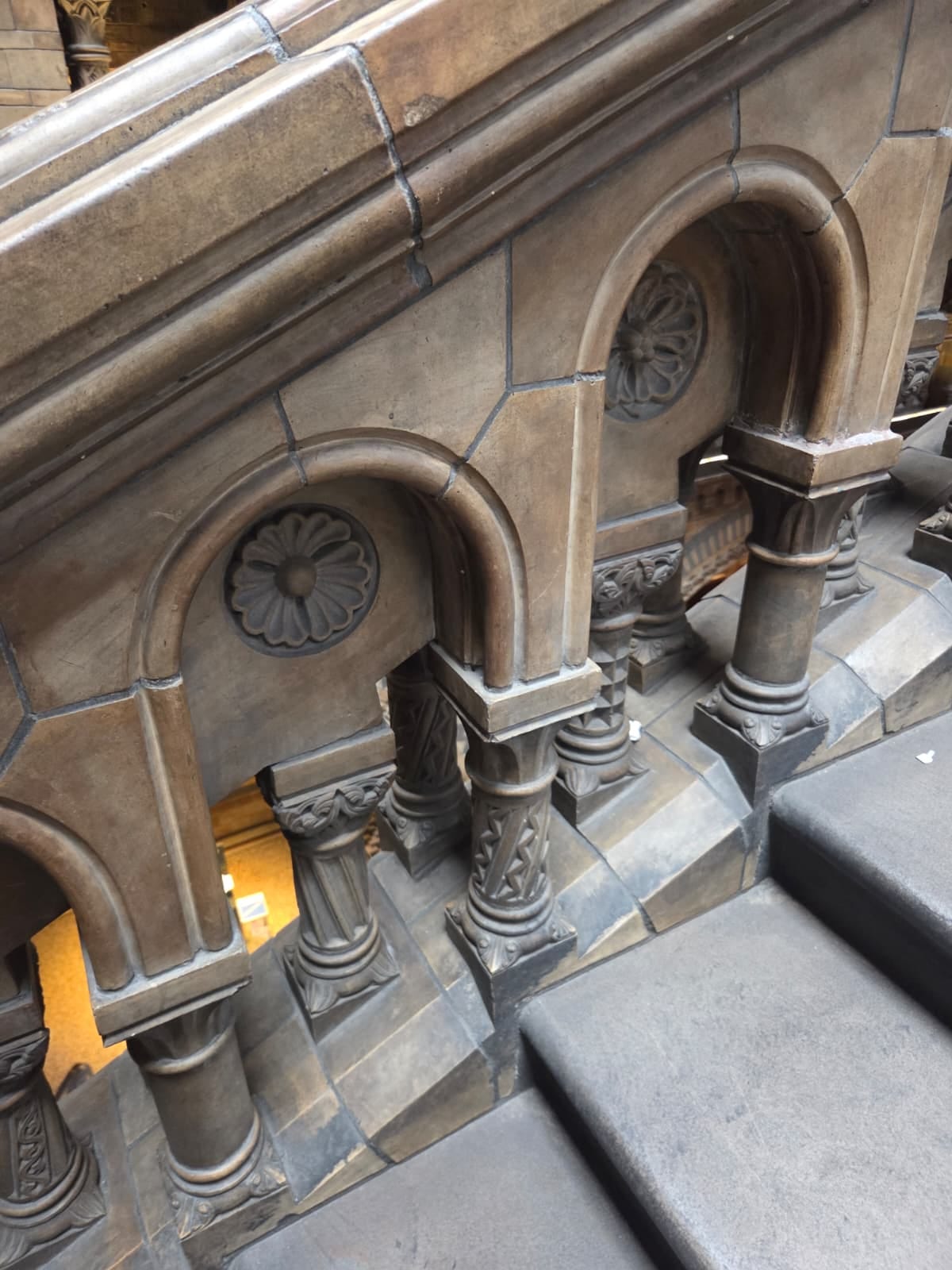
But my absolute favorite building in London is the Natural History Museum. Before visiting I had only glanced at photos, and stopped by as an afterthought, because my main purpose was to challenge myself with Brutalism and there is never enough time to experience everything. Now I want to return with the intention of drawing at the Natural History Museum over multiple days. It’s phenomenally detailed, with sculpted monkeys and birds climbing the arches and columns, which are often nested with multiple columns staggered in tight formations. I’ll leave you with pictures, until I have the chance to go back and spend time there drawing.
Very nice photo gallery, especially the venerable Natural History building! On the other, I didn't know brutalist could be that interesting.
Have you been to Mexico City? If not, you must. Green green green. Trees growing right in the middle of buildings, even ones several stories high.